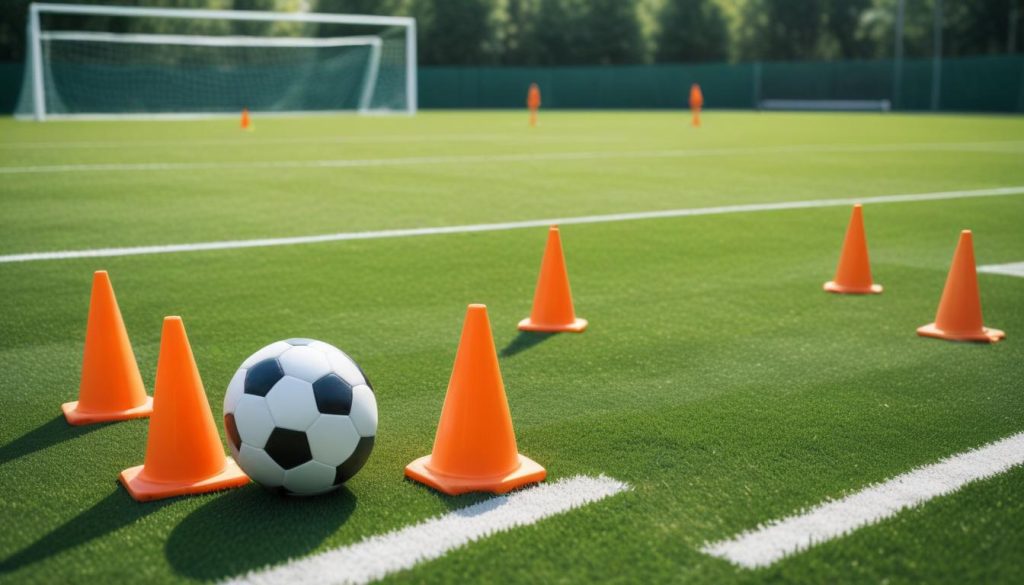

Understanding Age Appropriate Soccer Drills
When it comes to youth soccer training, one of the most important factors for success is tailoring soccer drills to be age appropriate. Each age group presents unique developmental stages that influence how effectively young players can learn and develop their skills. By understanding and implementing age appropriate soccer drills, coaches can ensure that their training sessions are both engaging and effective for players at every level.
In the early stages of youth soccer training, focusing on fundamental soccer drill basics is crucial. Young players benefit most from simple activities that promote coordination, balance, and basic ball control. Age appropriate soccer drills for younger children tend to emphasize fun and creativity, helping players build confidence and a love for the game. It’s important for coaches to recognize that younger players have shorter attention spans, so drills should be designed to be dynamic and varied.
As players progress into older age groups, their physical and cognitive abilities develop, allowing for more complex and strategic drills to be introduced. Soccer drill basics evolve accordingly, incorporating teamwork, positioning, and tactical understanding. Tailoring drills to these developmental changes ensures that players remain challenged without becoming overwhelmed. This progression not only helps players refine their technical skills but also deepens their understanding of the game.
Moreover, using age appropriate soccer drills helps prevent injuries and burnout by aligning the intensity and complexity of training with the players’ growth stages. Drills that are too advanced for a particular age group can hinder learning and even discourage continued participation. Conversely, drills that are too simple may fail to stimulate improvement and motivation. By carefully matching drills to the developmental needs of each age group, coaches create an optimal environment for skill development and enjoyment.
Overall, youth soccer training that incorporates age appropriate soccer drills is essential for fostering long-term player development. Coaches who adapt their training methods to fit the specific age groups help young athletes build a strong foundation in the sport, promoting both individual skill growth and a lasting passion for soccer.
Why Age Matters in Soccer Training
Understanding the importance of age in soccer training is crucial for selecting appropriate drills that match the physical, cognitive, and emotional development stages of young players. Age importance in soccer training stems from how these developmental stages influence training effects and overall player growth.
Physically, younger players are still developing fundamental motor skills and coordination. Drills for these age groups should focus on basic movements and agility to build a strong foundation. As players mature, their strength and endurance improve, allowing for more complex and intense training sessions. Tailoring drills to these evolving physical capabilities ensures effective skill acquisition and reduces injury risk.
Cognitively, age affects a player’s ability to understand game tactics and execute strategic plays. Younger children respond better to simple instructions and repetitive patterns in drills. Older players, with enhanced cognitive skills, can handle more nuanced training involving decision-making and situational awareness, which better simulates actual game scenarios.
Emotionally, coaching approaches must consider the player’s maturity and motivation. Drills that encourage teamwork, confidence, and enjoyment are essential for younger players to foster a positive attitude towards soccer. For older age groups, training can incorporate competitive elements and goal-setting to enhance focus and drive, maximizing the long-term benefits of the training effects.
In conclusion, recognizing how physical, cognitive, and emotional development impacts soccer training enables coaches to design age-appropriate drills that optimize learning and growth at every stage, ensuring players reach their full potential in the sport.
Benefits of Age Appropriate Soccer Drills
Age appropriate soccer drills provide significant benefits in youth soccer by enhancing player motivation, skill development, and injury prevention. When drills are tailored to the developmental stage of young players, they are more engaging and enjoyable, leading to increased motivation to participate and improve. This positive engagement is crucial for maintaining enthusiasm and commitment to the sport over time.
Skill development is optimized when soccer drills match the physical and cognitive abilities of each age group. Age-specific drills focus on foundational skills for younger players, progressively introducing more complex techniques as players mature. This step-by-step approach ensures that kids master essential movements and understand game concepts at a comfortable pace, resulting in stronger overall performance and smoother transitions to higher levels of play.
Furthermore, utilizing age-appropriate soccer drills plays a critical role in injury prevention. Young athletes’ bodies are still growing, and drills designed for their age group respect these physiological limits. Properly selected drills minimize the risk of overuse injuries and strain by emphasizing proper technique, gradual intensity increases, and sufficient rest. This careful attention to safety promotes long-term health and supports sustained participation in youth soccer.
In summary, the benefits of soccer drills that are tailored to the age of the participants include enhanced motivation, effective skill acquisition, and reduced injury risk, all of which contribute to a positive and rewarding experience in youth soccer development.
Age Specific Soccer Drills for Different Youth Stages
When developing effective youth soccer drills, it is crucial to tailor training exercises according to age groups. Each stage of a young player’s development requires specific focus areas that promote optimal soccer skills development while accommodating their physical and cognitive abilities. This approach ensures that the drills are engaging, safe, and supportive of long-term growth in the sport.
For the youngest players, typically aged 4 to 7 years, the emphasis should be on basic ball familiarity and fun. Youth soccer drills at this stage should include simple games that build comfort with controlling, dribbling, and passing the ball. Examples include “Red Light, Green Light” where players dribble and stop on command, and “Simon Says” with soccer movements. These exercises enhance motor skills, balance, and coordination without overwhelming young athletes with complex rules or tactics.
As players move into the 8 to 11 age group, training exercises should become more focused on refining fundamental skills while introducing basic tactical concepts. Drills such as dribbling through cones to develop close ball control, passing in pairs to improve accuracy, and small-sided games to reinforce positioning and teamwork are highly effective. At this stage, players are better able to understand instructions and benefit from more structured practice sessions, helping build a solid technical foundation.
For early adolescents aged 12 to 15, youth soccer drills need to address the increasing physical capabilities and tactical awareness inherent to this age group. Training should integrate advanced dribbling, passing under pressure, shooting drills, and situational game play that simulate real match scenarios. Exercises designed to enhance speed, agility, and endurance can be incorporated alongside technical skills development. This stage is decisive for developing competitive soccer skills and fostering a deeper understanding of the game’s strategies.
Finally, for ages 16 and up, drills can mirror those used by advanced and adult players, focusing on position-specific skills, strength training, and advanced tactical drills. This stage supports preparation for competitive play at higher levels. Complex team drills, tactical analysis, and individual skill refinement help players maximize their potential and transition smoothly into more demanding leagues and competitions.
In summary, aligning youth soccer drills with the developmental needs of different age groups ensures effective soccer skills development. By adapting training exercises to appropriate skill levels and cognitive readiness, coaches can create a positive and productive learning environment that fosters growth, confidence, and a lifelong passion for the sport.
Soccer Drills for Ages 4-7 (Introduction to Soccer)
Introducing young children to soccer with engaging and simple soccer drills 4-7 years is essential to spark their interest and build foundational skills. These introductory drills focus on developing basic soccer skills such as ball control, coordination, and most importantly, having fun on the field. Children at this age are learning to associate teamwork and physical activity with enjoyment, so drills should be playful and not overly technical.
One effective drill is “Red Light, Green Light” with the soccer ball, where kids dribble the ball forward on “green light” and stop or slow down on “red light.” This drill enhances control and listening skills. Another fun activity is simple passing games, where players pass the ball back and forth in pairs, encouraging coordination and teamwork. Using cones to create obstacle courses for dribbling helps develop agility and ball handling in a joyful setting.
These fun soccer activities keep young players motivated while laying the groundwork for more complex techniques later on. Coaches and parents should emphasize encouragement, positive reinforcement, and short sessions to maintain attention and enthusiasm. Overall, the goal is to introduce children to soccer in a way that fosters a love for the game through basic soccer skills and enjoyable, introductory drills.
Soccer Drills for Ages 8-12 (Skill Building Stage)
At the skill building stage for youth soccer training (ages 8-12), technical drills are essential to help players develop fundamental abilities such as passing, dribbling, and shooting. These soccer drills 8-12 focus on refining control, accuracy, and decision-making, providing a solid foundation for future advancement.
One effective passing drill involves pairing players to practice short and long passes under mild pressure. This encourages precision and communication, bolstering their teamwork skills. Incorporating a moving target or a small goal can increase focus and simulate game conditions.
For dribbling, set up cones in a zigzag pattern allowing players to weave through while maintaining close ball control. Encourage use of both feet and different parts of the foot to enhance versatility. This drill cultivates agility, foot coordination, and spatial awareness critical at this stage.
Shooting drills should emphasize technique and accuracy rather than power. Using stationary and moving ball approaches, players practice shooting into targets with varied distances and angles. Introducing a goalkeeper adds challenge and realism, motivating players to improve both precision and confidence.
Combining these skill building drills in youth soccer training ensures players aged 8-12 develop a well-rounded technical base, preparing them for more advanced tactics and complex gameplay as they grow.
Soccer Drills for Ages 13-18 (Advanced Development)
For teen players aged 13-18 looking to excel in competitive youth soccer, incorporating advanced training techniques is essential. The following soccer drills 13-18 focus on tactical awareness, advanced technical skills, and physical conditioning tailored to this development stage.
| Drill Name | Focus Area | Description | Benefits |
|---|---|---|---|
| Positional Play Scrimmage | Tactical Drills | A small-sided game emphasizing team shape, player positioning, and decision-making under pressure to improve game intelligence. | Enhances tactical awareness, spatial understanding, and communication. |
| Advanced Ball Control & Dribbling | Technical Skills | Drills involving tight-space dribbling, feints, and quick turns to refine ball mastery and agility. | Boosts technical precision and confidence in 1v1 situations. |
| High-Intensity Interval Training (HIIT) | Physical Conditioning | Short bursts of all-out effort with recovery, tailored to mimic match intensity and improve stamina and speed. | Increases cardiovascular fitness, explosiveness, and recovery time on the field. |
| Set Piece Strategy | Tactical Drills | Practicing corner kicks, free kicks, and penalty scenarios to develop rehearsed plays and situational awareness. | Improves scoring opportunities and defensive organization on set pieces. |
Tips for Coaches and Parents Using Age Appropriate Drills
When coaching young players, it is essential to use age appropriate soccer drills that match their developmental stage and skill level. Tailoring training to their abilities not only helps improve performance but also keeps children engaged and motivated. Coaches and parents should focus on fostering a positive environment where learning and fun go hand in hand.
One key coaching tip is to emphasize simple instructions and clear objectives for each drill. Young athletes respond best when they understand exactly what is expected of them. Break down complex skills into manageable steps and allow plenty of repetition to build confidence. Patience and encouragement are vital components of effective youth sports coaching.
Parent advice includes actively supporting the child’s involvement without pressuring performance. Attend practices and games to show interest, and provide positive reinforcement regardless of outcome. Celebrate progress and effort over winning to help nurture a love for the game. This approach encourages sustained participation and personal growth.
Soccer training guidance also suggests incorporating variety within drills to maintain excitement. Rotate different activities to challenge players physically and mentally, while preventing boredom. Fun, game-like scenarios allow children to apply skills in realistic situations, which enhances learning and retention.
To keep young players motivated, coaches should recognize individual achievements and create opportunities for social interaction among teammates. Building a supportive team atmosphere reinforces cooperation and enthusiasm for the sport. Positive feedback and celebrating milestones make players feel valued and motivated to improve.
In summary, successful implementation of age appropriate drills depends on understanding the unique needs of young players and combining thoughtful coaching tips with parent support. By focusing on skill development, enjoyment, and encouragement, both coaches and parents can cultivate a positive environment that inspires youth to thrive in soccer and beyond.
Adapting Drills to Individual Skill Levels
To optimize player development within the same age group, drill adaptation is essential. Not all players possess the same abilities, so adjusting drills to fit individual skill levels ensures that every player remains challenged yet capable of success. Coaches should assess each player’s strengths and weaknesses, then modify drills accordingly. For example, simplifying tasks for beginners by reducing the speed or complexity helps build confidence, while advanced players can be given additional challenges to promote growth.
Individualized training allows for specific skill level adjustments within group drills. This could mean altering the distance between cones, increasing the number of repetitions, or introducing competitive elements for more skilled players. Such customization encourages continuous improvement and prevents frustration or boredom. By tailoring drills to the unique needs of each player, coaches foster a supportive environment that nurtures development and engagement for everyone involved.
Ultimately, incorporating skill level adjustments into drill adaptation creates a balanced training session where all players can progress at their own pace. This approach not only enhances technical abilities but also builds confidence and motivation, paving the way for long-term success in soccer. By focusing on individualized training, coaches can ensure each player receives the attention they need to thrive within their age group.
Maintaining Engagement and Fun During Training
Ensuring player engagement during soccer practice is crucial for building a lasting passion for the sport. Incorporating fun soccer drills is one effective way to keep young athletes motivated and eager to return to training sessions. Coaches should aim to balance skill development with activities that spark excitement and challenge players in a playful environment.
One key strategy is to vary drills frequently, preventing monotony and maintaining high energy levels. Introducing competitive elements, such as small-sided games or timed challenges, can boost youth motivation by tapping into their natural desire to improve and succeed. Additionally, allowing players some choice in drills encourages a sense of ownership and personal investment in their progress.
Another important aspect is creating a positive atmosphere where mistakes are viewed as learning opportunities rather than failures. Praise and constructive feedback help young players feel confident and supported, which enhances training enjoyment. Integrating team-building exercises or fun warm-up games can also strengthen camaraderie and social bonds, further increasing motivation.
Ultimately, maintaining a focus on enjoyment alongside skill development leads to higher player engagement and a lifelong love for soccer. By incorporating fun soccer drills and thoughtful coaching techniques, trainers can inspire youth to stay committed and enthusiastic about their soccer journey.

I’ve been playing soccer since I was a kid and love breaking down drills to help players improve. When I’m not on the pitch, I enjoy analyzing games and sharing practical tips with fellow enthusiasts.