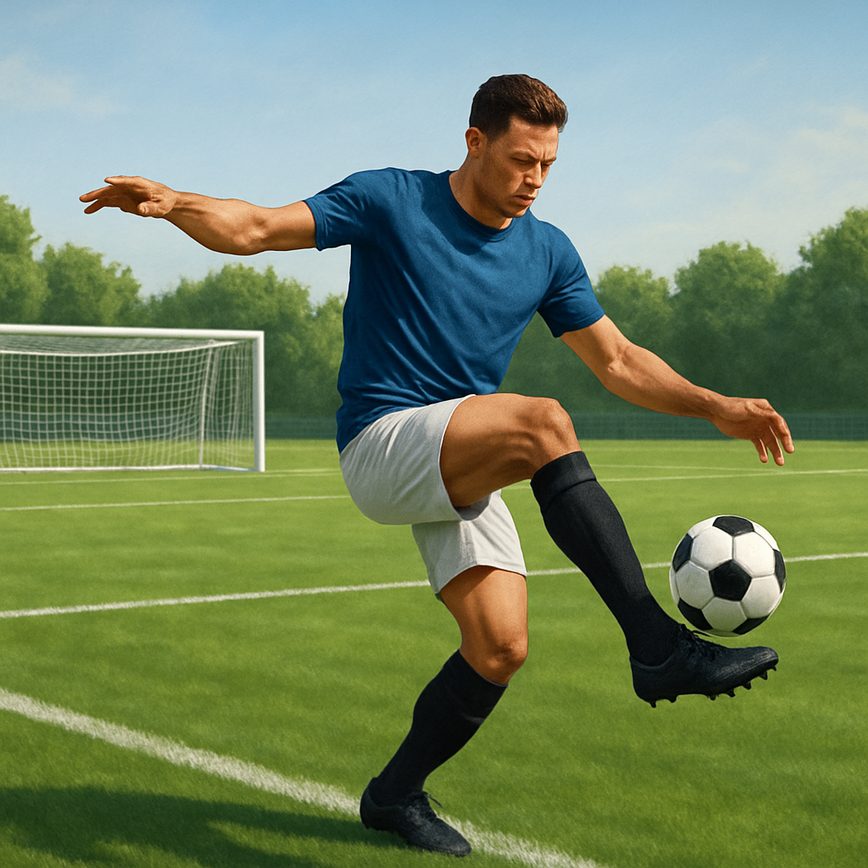
Importance of Balance in Soccer
Balance in soccer is a fundamental component that greatly influences a player’s overall performance on the field, as highlighted in the fundamentals of youth soccer. It provides the essential stability a player needs to execute quick turns, maintain control while dribbling, and effectively challenge opponents physically. Without proper athletic balance, these critical movements become inconsistent and less efficient, which can directly diminish a player’s effectiveness during a game.
Player stability, underpinned by superior balance in soccer, is crucial for executing high-level skills. When players maintain their equilibrium, they can swiftly shift their weight from one foot to another, respond to dynamic changes in the game, and sustain their posture even under pressure. This stability not only improves ball control but also enhances agility and speed, key aspects that separate top performers from the rest.
Moreover, balance plays a vital role in injury prevention. Soccer is a sport involving rapid directional changes, jumps, and tackles, which place significant stress on joints and muscles. A strong sense of balance allows players to absorb and distribute these forces more effectively, reducing the risk of falls, sprains, and other common injuries. Athletes who develop good balance are better equipped to protect themselves from the physical demands of the game, ensuring a longer and healthier career.
Developing athletic balance in soccer also has a psychological benefit, which can be reinforced through small-sided games for youth. Confidence in one’s physical ability fosters a positive mindset, allowing players to trust their movements and make decisive actions without hesitation. This mental stability mirrors physical balance, contributing to improved decision-making and sharper competitive instincts on the pitch.
In summary, balance in soccer is indispensable for maximizing soccer performance, enhancing player stability during complex maneuvers, and minimizing injury risks. Training focused on improving balance equips players with the necessary tools to remain steady, agile, and resilient throughout the demands of any match, ultimately elevating their game and contributing to team success.
How Balance Affects Soccer Skills
Balance has a significant impact on essential soccer skills such as dribbling, shooting, and defending. Good player control during these actions is largely dependent on maintaining balance, which ensures the ability to respond quickly and effectively under pressure. For example, while dribbling, players must constantly shift their weight and change directions rapidly. If balance is compromised, the player may lose control of the ball or become vulnerable to tackles.
During shooting, balance is critical for generating power and accuracy, as emphasized in shooting drills for youth. A player who struggles with balance may have difficulty positioning their body correctly, leading to weak or inaccurate shots. Similarly, when defending, maintaining equilibrium allows players to stay on their feet while challenging opponents, intercepting passes, or making tackles. Balance challenges often arise during gameplay when players are forced to perform sudden stops, jumps, or pivots on uneven or changing terrain.
Improving balance directly contributes to skill improvement across all facets of the game. Players with better balance exhibit superior control and stability, which helps in maintaining possession, executing precise shots, and performing effective defensive maneuvers. Ultimately, training balance leads to enhanced overall performance on the field, allowing athletes to meet the dynamic demands of soccer with greater confidence and efficiency.
Common Balance Issues in Soccer Players
Balance problems are common among soccer players and can significantly impact their performance on the field. Stability challenges often arise due to the dynamic and fast-paced nature of soccer, requiring quick changes in direction and sudden stops. When players struggle with maintaining their balance, their coordination suffers, making it difficult to execute precise movements such as dribbling, passing, and shooting.
These stability challenges not only hinder player coordination but also increase the risk of soccer injuries. Poor balance can lead to improper landing techniques and awkward body positions, putting extra strain on joints and muscles. This increases the likelihood of sprains, strains, and even more severe injuries like ACL tears. Consequently, players with balance problems are more prone to time off the field due to injury recovery, which can affect team performance and player development.
Improving balance is crucial for reducing injury risk and enhancing overall game effectiveness. Soccer players must focus on developing their core strength and proprioception to overcome these common balance issues. Incorporating targeted balance drills into regular training can help players stabilize their bodies during play, leading to better coordination, similar to what is taught in coordination drills for kids. Addressing balance problems early can therefore make a substantial difference in a player’s career longevity and success on the field.
Effective Balance Drills for Soccer Players
| Drill Name | Skill Level | Description | Benefits |
|---|---|---|---|
| Single-Leg Stand | Beginner | Stand on one leg for 30 seconds, increasing time as balance improves. Use arms for balance and switch legs. | Enhances basic balance and stability, fundamental for all soccer players. |
| Balance Board Training | Intermediate | Use a balance board to perform controlled movements, focusing on maintaining equilibrium during shifts. | Improves proprioception and muscle control, vital for quick directional changes in soccer training. |
| Bosu Ball Squats | Intermediate | Perform squats on a Bosu ball to challenge core and leg stability while maintaining form. | Develops dynamic balance and strength, supporting better player exercises on the field. |
| Dynamic Lunges with Reach | Advanced | Step forward into a lunge while reaching opposite arm towards the extended leg, then return to standing position. | Improves balance under motion, mimics in-game movements enhancing overall performance. |
| Single-Leg Hops | Advanced | Hop forward and backward on one leg, landing softly and maintaining control with each jump. | Boosts explosive balance and agility, critical for competitive soccer training. |
These balance drills are designed to cater to various skill levels, much like age-appropriate soccer drills that ensure every soccer player can enhance their stability and control. Incorporating balance drills into regular soccer training not only improves player exercises but also significantly contributes to overall balance improvement on the field. Beginners should focus on static holds like the Single-Leg Stand to build a solid foundation. Intermediate players can introduce more dynamic tools such as balance boards and Bosu balls, which add complexity while training core muscles. Advanced drills, including dynamic lunges and single-leg hops, simulate actual game situations, enhancing performance during fast and unpredictable play. Consistent practice of these balance drills leads to improved coordination, reduced injury risk, and optimized soccer performance.
Single-Leg Balance Drills
Single-leg balance drills are essential soccer drills that focus on improving balance training and leg strength, making them a staple in beginner soccer practice plans. These exercises help players develop unilateral stability, which is crucial for maintaining control during dynamic movements on the field.
One effective drill is the Single-Leg Stand, which is commonly used in defensive drills for youth. Stand on one leg with the knee slightly bent and hold the position for 30 seconds to a minute. To increase difficulty, close your eyes or stand on an unstable surface like a balance pad. Maintaining proper posture is key—keep your hips level and avoid leaning to one side.
Another valuable exercise is the Single-Leg Reach, where the player stands on one leg and reaches forward, sideways, or backward with the opposite leg while keeping balance. This drill enhances proprioception and mimics the unilateral demands soccer players face during play.
Lastly, the Single-Leg Hops drill builds power and stability. Perform controlled hops forward or laterally on one leg, focusing on landing softly and maintaining balance. This strengthens the leg muscles and improves joint stability, lowering the risk of injury.
Incorporating these single-leg balance exercises into your training regimen will improve your soccer performance by enhancing unilateral strength and balance, allowing you to maintain control and agility during match situations.
Dynamic Balance Exercises
Dynamic balance exercises are essential for soccer players looking to enhance their movement drills, balance coordination, and overall agility training. These drills involve maintaining stability while in motion, often combined with ball control to simulate real-game scenarios. One effective exercise is dribbling the ball through cones or markers laid out in varying patterns. This encourages players to shift their weight seamlessly while maintaining control of the ball, improving balance in dynamic situations.
Another drill involves performing quick lateral shuffles or zigzag runs while keeping the ball close to the feet. This challenges the player’s ability to stay balanced and coordinated during rapid changes in direction. Incorporating movements such as toe taps on the ball or quick foot taps alternating between feet while jogging enhances footwork coordination and dynamic balance simultaneously.
To further develop balance in motion, players can practice passing the ball between partners while moving sideways or backward, promoting agility training under pressure. This not only improves physical stability but also sharpens focus and reaction times, critical for game performance. These dynamic drills build a foundation of balance coordination that translates directly to better control, speed, and precision on the field.
Partner and Group Balance Activities
Incorporating partner drills and group exercises into soccer training sessions is an excellent way to simultaneously enhance players’ balance and foster teamwork. Partner drills are particularly effective because they require players to rely on each other for stability and coordination. For example, a common drill involves two players standing on one leg while passing a ball back and forth, challenging their balance and focus as they maintain control and rhythm.
Group exercises take this concept further by involving multiple players in balance games that demand collective effort and communication. One engaging group exercise is the “circle balance” game, where players stand in a circle and pass the ball around without losing their balance. This activity encourages players to stabilize their bodies while remaining attentive to their teammates, promoting a sense of unity during training.
Other balance games in a team training context might include relay races with balance beams, cooperative plank holds, or sequences of dynamic movements requiring synchronized footwork. These exercises not only improve individual stability but also build trust and cooperative skills among players. Overall, integrating partner drills and group exercises into balance training can elevate both physical functionality and team cohesion on the field, making practices more productive and enjoyable.
Tips to Integrate Balance Training into Soccer Practice
Integrating balance training tips into regular soccer practice is essential for effective skill development and injury prevention. Coaches and players alike can benefit from seamlessly incorporating balance drills into their training routines without disrupting the flow of practice. Here are some practical strategies to ensure balance training becomes a natural part of your soccer coaching sessions.
Firstly, start by incorporating simple balance exercises into warm-up routines. For example, single-leg stands or dynamic balance movements like hopping on one foot can activate the muscles necessary for maintaining stability during gameplay. These exercises can be done while waiting for players to arrive or between drills, ensuring no time is wasted during practice integration.
Secondly, combine balance drills with ball handling skills. Using unstable surfaces such as balance discs or wobble boards while performing dribbling or passing drills challenges players’ proprioception and control. This dual task approach not only improves balance but enhances overall coordination, making balance training tips more relevant to real-game scenarios.
Next, include balance-focused activities within conditioning games to keep players engaged. For instance, create small-sided games where players must maintain a steady posture while controlling the ball or scoring, emphasizing stability under pressure. This practice integration reinforces balance concepts in a dynamic and competitive environment, boosting player motivation and learning.
Moreover, coaches should tailor balance exercises according to the player’s level and needs. For beginners, static holds and basic stability movements are ideal, while advanced players benefit from more complex drills involving agility and reactive balance. Personalizing training routines ensures that all athletes receive appropriate challenges to improve their balance effectively.
Finally, review and track progress regularly. Use video analysis or balance assessment tools to monitor improvements and adjust training programs accordingly. Encouraging players to focus on continuous development helps maintain enthusiasm and highlights the importance of balance training within the broader context of soccer coaching.
By weaving balance drills into everyday soccer practice sessions through these balance training tips, coaches can create a holistic training environment that promotes stability, enhances performance, and reduces injury risks across all skill levels.
Scheduling Balance Drills Effectively
Incorporating balance drills into your soccer training schedule requires thoughtful planning to maximize their benefits. For optimal results, balance drills should be integrated regularly within your practice sessions, ideally two to three times per week. Consistency is key to improving stability and body control, which translates directly to better performance on the field.
When planning the timing of balance drills in your training schedule, consider placing them either at the beginning of practice sessions as part of the warm-up routine or immediately after a warm-up. This approach ensures that players are mentally engaged and physically prepared, reducing the risk of injury. Additionally, placing balance drills early allows athletes to focus fully on maintaining proper form.
The duration of each balance drill session should range between 10 to 15 minutes, making them concise enough to keep players focused while providing adequate time to develop proper technique. Avoid overloading training with prolonged balance exercises to prevent fatigue, which could compromise effectiveness and safety.
Practice planning should also consider the overall soccer routine by balancing skill-based drills, conditioning, and tactical work alongside balance training. By integrating balance drills systematically within your training schedule, you foster enhanced coordination and agility, leading to improved performance and injury prevention.
Monitoring Progress and Adjusting Drills
Tracking progress in balance training is vital to ensure continuous player development. One effective method is to keep detailed records of each player’s performance in specific drills over time. This can include noting improvements in duration, stability, and control during exercises. Video recordings can also be employed for visual analysis and to compare form and technique improvements. Combining quantitative data with qualitative observations provides a comprehensive view of progress.
Drill adaptation plays a crucial role in maintaining the effectiveness of training. Based on the progress tracking data, coaches should modify drills to increase complexity, duration, or intensity as players improve. Adjustments might include introducing new balance challenges, varying surfaces, or integrating ball control elements to simulate game scenarios. This ensures players remain engaged and continue to develop their balance skills without plateauing.
Player feedback is another essential component for successful training evaluation. Encouraging players to share their experiences and difficulties helps identify what aspects of the drills are most beneficial and which might need alteration. This dialogue allows coaches to tailor sessions to individual needs, promoting better skill acquisition and motivation.
Ultimately, effective progress tracking combined with responsive drill adaptation and active player feedback creates a dynamic training environment. This approach ensures balance drills remain relevant and challenging, fostering continuous improvement in player stability and control on the soccer field.

I’ve been playing soccer since I was a kid and love breaking down drills to help players improve. When I’m not on the pitch, I enjoy analyzing games and sharing practical tips with fellow enthusiasts.