
Importance of Agility in Soccer
Agility in soccer is an essential skill that greatly impacts a player’s overall performance, establishing it as one of the key fundamentals of youth soccer. It encompasses the capacity to swiftly alter direction, stay balanced, and manage body movements effectively in fast-paced and unpredictable scenarios. In a sport where quick responses and precise movements are vital, a player’s agility emerges as a crucial element for achieving success.
A key reason why agility is vital in soccer lies in the sport’s inherent characteristics. Soccer requires players to constantly adjust their speed and direction, whether they’re dodging opponents, swiftly changing angles to collect the ball, or responding defensively to an adversary’s actions. Athletes with superior agility can more effectively maneuver through confined areas, evade tackles, and generate scoring chances by outsmarting their rivals.
In addition, agility boosts a player’s capacity to keep control when facing pressure. A player who can quickly modify their body stance and actions is less prone to losing balance or the ball in small sided games. This steadiness not only enhances personal performance but also fosters a more unified team dynamic, where rapid and accurate movements can result in successful passing, defending, and attacking tactics.
From a defensive perspective, agile players are able to respond more quickly to the actions of their opponents, reducing available space, intercepting passes, and launching counter-attacks more effectively. This quickness complicates the opposing team’s efforts to identify and take advantage of vulnerabilities. For offensive players, agility facilitates quicker turns and increased acceleration, improving their chances of penetrating defensive barriers and generating scoring opportunities.
Enhancing agility in soccer involves more than just increasing speed; it also requires honing coordination, balance, and rapid reflexes. Training exercises that emphasize these elements allow players to boost their soccer skills by making their movements more seamless, powerful, and precise. This all-encompassing growth results in improved decision-making, greater stamina throughout games, and an elevated overall performance level.
To sum up, agility in players is crucial for achieving success in soccer. It affects almost every facet of the game, spanning both offense and defense, and has a direct effect on a player’s efficiency and role in enhancing the team’s overall performance on the pitch. Focusing on agility training is vital for any soccer player looking to refine their abilities and advance their game.
Benefits of Agility Training
Agility training provides a variety of benefits that are crucial for boosting soccer fitness, similar to soccer warm up exercises and overall effectiveness on the field. A key benefit is enhanced reaction time, enabling players to quickly adapt to opponents’ actions, surprise passes, and shifts in game flow. This speed in decision-making and mobility can offer a considerable advantage during competitions.
Moreover, agility exercises improve both balance and coordination. Soccer involves constant shifts in direction, quick turns, and the need to stay stable under duress. By focusing on agility training, athletes can gain greater control over their movements, lowering the chances of falling and enhancing their skill in keeping possession while navigating through crowded areas.
One significant advantage of agility training is its role in preventing injuries. When agility drills are performed correctly, they enhance the strength of muscles, tendons, and ligaments, making them more resistant to strains and sprains. This is especially vital in sports such as soccer, where quick side-to-side movements can result in injuries. By including agility exercises in training programs, athletes can preserve their physical well-being and minimize the time lost due to injuries.
In the end, agility training helps soccer players improve their speed, boost their fitness for the sport, and promote superior control and resilience against injuries. Regardless of whether preparing for youth leagues or professional competition, agility drills are fundamental to create a more powerful, quicker, and agile athlete.
How Agility Affects Game Performance
Improved soccer agility greatly enhances performance by refining essential skills on the field, including dribbling, defending, and overall tactical play. Agility allows players to swiftly change directions while keeping control of the ball, resulting in smoother and more accurate dribbling, even in high-pressure situations. This quick movement ability aids players in avoiding defenders and generating scoring chances more efficiently.
In defense, agility holds equal importance. Agile players are able to react quickly to their opponent’s actions, modifying their stance to prevent passes or seize the ball. This rapid reaction capability is vital for neutralizing offensive plays before they escalate into threats, thereby enhancing the strength of the defensive unit. Proficient defending relies on the capacity to shift laterally and retreat quickly, a clear advantage of enhanced soccer agility.
Beyond individual skills, soccer agility enhances overall game tactics. Players with high agility can adapt to fast-changing game situations, supporting team strategies that require quick transitions between offense and defense. The ability to maintain balance, coordination, and speed while making strategic decisions on the field leads to better execution of plays and increased team effectiveness. Ultimately, soccer agility enriches game performance by making players more versatile and responsive, improving their contribution to both personal and team success.
5. Structured Soccer Drills for Agility Improvement
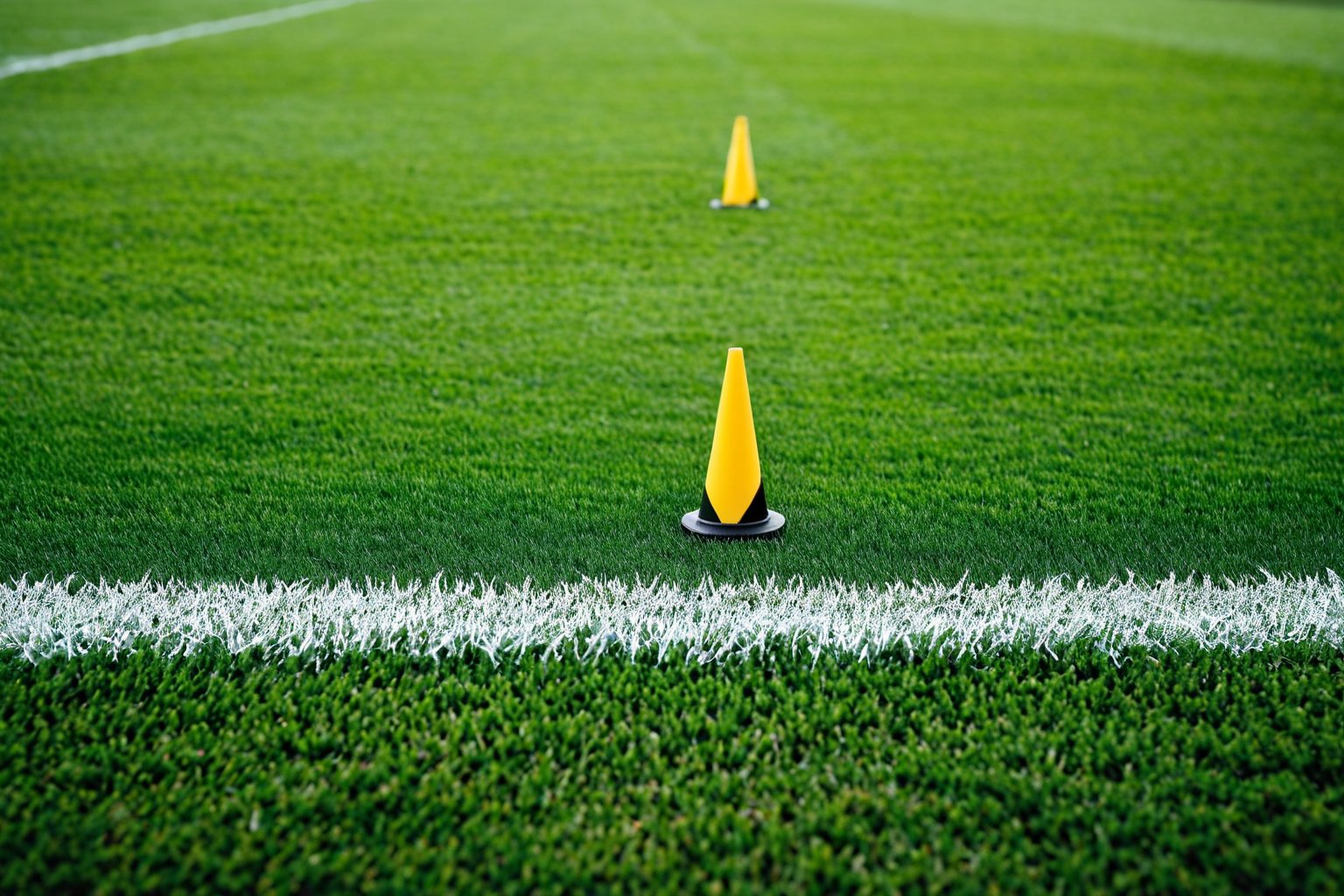
- Cone Zigzag Drill: Set up cones in a zigzag pattern about 3-4 feet apart. Sprint from one cone to the next, focusing on quick lateral movements and sharp cuts. This drill enhances the quick directional changes essential in soccer agility drills.
- Ladder Quick Steps: Use an agility ladder laid flat on the ground. Perform quick, precise foot placements inside each rung, advancing forward as fast as possible without losing form. This training exercise improves foot speed and coordination, key elements for soccer players.
- Box Drill: Place four cones in a square, about 5 yards apart. Sprint forward to the first cone, side shuffle to the second, backpedal to the third, and side shuffle back to the start. This drill mimics game-like movement patterns crucial for soccer agility.
- T-Drill: Arrange cones in the shape of a “T”. Sprint forward to the middle cone, shuffle sideways to the left cone, shuffle all the way right to the opposite cone, then shuffle back to the middle and backpedal to the start. This complex movement drill is excellent for developing multi-directional agility required in soccer.
- Shuttle Runs: Mark two lines approximately 10-15 yards apart. Sprint back and forth between the lines, focusing on explosive starts and stops. This training exercise builds acceleration, deceleration, and overall agility on the soccer field.
- Circle Cone Drill: Set cones in a circular formation. Dribble or sprint around the circle, changing direction at each cone with sharp pivots. This drill combines ball control with agility development for enhanced game performance.
- Reactive Agility Drill: Have a partner point or shout directions randomly while you perform quick sprints or lateral movements in those directions. This drill trains both physical agility and mental responsiveness, vital for soccer players during intense moments of the game.
- Hurdle Hop: Set small hurdles spaced evenly. Hop over each hurdle with both feet simultaneously, focusing on quick, explosive jumps and landings. This plyometric exercise supports leg power and quickness needed for agile soccer movements.
Incorporating these soccer drills and agility drills into your training exercises will significantly boost your ability to make fast, effective movements on the pitch. Consistently practicing these structured drills sharpens footwork, balance, coordination, and reaction time, all critical components covered in beginner soccer practice plans to becoming a more agile and skillful soccer player.
Cone Drills for Quick Direction Changes
Cone drills are essential agility exercises designed to enhance quick footwork and sharp direction changes, much like age appropriate soccer drills on the soccer field. These drills use simple setups with cones arranged in various patterns to challenge a player’s ability to accelerate, decelerate, and pivot efficiently.
One popular cone drill is the zigzag drill, where cones are spaced evenly in a straight line and players sprint from one cone to the next, making sharp lateral cuts. This drill trains both agility and balance, improving how quickly a player can change direction without losing speed or control, similar to ball control drills for youth.
Another effective exercise is the T-drill, which incorporates forward sprints, side shuffles, and backpedaling around cones placed in a ‘T’ shape. The T-drill is excellent for training multi-directional movement, helping players react swiftly during dynamic game situations.
The figure-eight drill uses cones arranged in a loop, encouraging players to weave quickly in tight spaces. This drill develops foot speed and body control, both critical for making evasive maneuvers during a match.
Incorporating cone drills regularly into training routines boosts a player’s ability to execute rapid direction changes with precision. These agility exercises not only enhance footwork but also build the muscular endurance and coordination necessary for competitive play.
Ladder Drills to Enhance Foot Speed
Ladder drills are an excellent way to improve foot speed, coordination, and overall agility. By using an agility ladder laid flat on the ground, players can perform a variety of footwork patterns that challenge their quickness and precision. These drills require athletes to move their feet rapidly while maintaining proper balance and control, which translates to better performance on the soccer field.
One common ladder drill involves stepping through each square with one foot at a time, focusing on quick touches and minimal ground contact. This drill helps develop neuromuscular coordination, allowing players to increase their foot speed effectively. As coordination improves, players are able to execute faster changes of direction and enhance their reaction times during play.
Another variation includes lateral shuffles where players move sideways through the agility ladder, emphasizing controlled and rapid side steps. Incorporating these ladder drills into training routines boosts the player’s ability to maneuver swiftly around opponents and adjust their positioning with ease. Over time, these exercises build endurance in foot muscles and promote sharper, faster movements, making ladder drills a fundamental component of agility training in soccer.
Plyometric Exercises for Explosive Agility
Plyometric exercises are essential for soccer players aiming to enhance their explosive agility. These exercises focus on jump training, which builds the fast-twitch muscle fibers crucial for rapid, powerful movements on the field. Incorporating plyometric exercises into your routine not only improves vertical leap but also develops the ability to change direction quickly and maintain balance during high-intensity play.
One effective plyometric drill is the box jump. This exercise involves jumping onto and off a sturdy platform, helping players generate explosive power in their legs. Another valuable exercise is the lateral bounds, which mimic the side-to-side movements needed to evade defenders. These bounds train muscle elasticity and coordination, contributing significantly to a player’s agility.
Jump squats also form a core part of plyometric training. By combining a squat with an explosive jump, this drill enhances both strength and speed, reinforcing the muscles used in sprinting and quick directional shifts. Additionally, depth jumps, where players jump down from a height and immediately explode upward, simulate the quick ground contact times necessary during a game.
Regularly performing these plyometric exercises can dramatically improve a player’s explosive agility. This makes them quicker on their feet, better at jump training dynamics, and more adept at the fast bursts of movement required during soccer matches.
Tips for Integrating Agility Drills into Training

Incorporating agility drills into your soccer training routine is essential to enhance footwork, quick directional changes, and overall performance on the field. Whether you are a coach designing a soccer agility plan or a player eager to improve, following specific training tips can ensure effective workout integration and maximize the benefits of agility exercises.
First, schedule agility drills consistently within your training sessions. Ideally, these drills should be placed at the beginning, after a thorough warm-up, when players are fresh and can give maximum effort. Including these drills 2-3 times per week helps develop neuromuscular adaptations while preventing burnout from overtraining.
Next, tailor your soccer agility plan to match the skill level and goals of your players. Beginners should start with fundamental movements focusing on balance and coordination. More advanced players can integrate complex multi-directional patterns and reactive drills that simulate game scenarios. This progression ensures continuous improvement and sustained engagement.
Another key training tip is to maintain quality over quantity. Execute each drill with proper technique, emphasizing quick foot placement, body control, and explosive movements. Coaches should observe and provide immediate feedback to players to correct form and prevent bad habits. Precision in agility drills translates directly into better game performance.
To effectively integrate agility workouts, combine them with other fitness components such as strength training, plyometrics, and endurance exercises. This holistic approach builds overall athleticism, making agility gains more transferable to match situations. For example, incorporating ladder drills before sprint intervals enhances speed and foot speed simultaneously.
Additionally, vary the drills regularly to keep training stimulating and avoid plateaus. Introduce new movement patterns, use cones or hurdles for added challenge, and include partner or small group agility competitions. These variations boost motivation and simulate the unpredictable nature of soccer games.
Finally, monitor progress through timed tests or performance tracking to measure improvements in agility over weeks and months. Use data to adjust your soccer agility plan, increasing intensity or complexity as needed to continue development. Regular assessment helps maintain focus and validates the effectiveness of your training tips.
By following these actionable strategies, coaches and players can successfully incorporate agility drills into their routines, enhancing soccer-specific skills and elevating overall athletic performance.
Frequency and Duration Recommendations
To maximize agility gains through soccer drills, it is essential to find the right balance in training frequency and workout duration. Training frequency should ideally be 3 to 4 times per week, allowing adequate recovery time between sessions to prevent overtraining and reduce injury risk. Consistent repetition strengthens neural pathways responsible for quick movements and sharp directional changes, key components of agility.
Each agility practice session should last between 20 to 40 minutes. This duration is sufficient to maintain high intensity and focus, enabling players to perform drills with maximum effort and precision. Shorter sessions may not stimulate enough adaptation, while longer workouts can lead to fatigue and decreased technique quality.
Integrating varied drills within each workout helps keep the sessions engaging and targets different aspects of agility such as acceleration, deceleration, and lateral movement. Additionally, combining agility drills with other conditioning exercises ensures a comprehensive approach to performance improvement.
Remember, gradual progression in both training frequency and workout duration is crucial for continuous improvement. Listen to the body’s feedback and adjust accordingly to avoid burnout. Prioritize recovery methods like rest, hydration, and stretching to enhance agility practice benefits and sustain long-term athletic development.
Warm-Up and Cool-Down for Agility Sessions
Proper warm-up routines are essential for preparing the body for the demands of agility training. Engaging in a well-structured warm-up increases blood flow to the muscles, elevates heart rate, and enhances joint mobility. This not only primes the body for intense movements but also significantly reduces the risk of injury. A warm-up should include dynamic stretches and sport-specific drills that mimic the agility actions players will perform, allowing muscles and tendons to adapt gradually to the training intensity.
Equally important are cool-down exercises after agility sessions. Cool-downs facilitate a gradual decrease in heart rate and promote the removal of metabolic waste products from muscles. Incorporating static stretching during this phase helps improve flexibility and aids in muscle recovery, which can prevent stiffness and soreness. Consistent cool-down practices contribute to long-term injury prevention by maintaining muscle length and joint function.
Together, warm-up and cool-down techniques form the foundation of safe and effective agility training. They not only enhance performance by preparing the body and mind but also play a crucial role in injury prevention. Athletes who neglect these routines risk muscle strains, joint injuries, and prolonged recovery periods. Emphasizing these phases in each session ensures the athlete’s body remains resilient and able to meet the physical challenges of soccer agility drills.

I’ve been playing soccer since I was a kid and love breaking down drills to help players improve. When I’m not on the pitch, I enjoy analyzing games and sharing practical tips with fellow enthusiasts.