

Every weekend across America, thousands of youth soccer fields hum with the energy of kids chasing dreams. Coaches blow whistles, parents cheer from the sidelines, and young players sprint after balls with varying degrees of skill. Yet beneath the surface of this vibrant scene, many training programs repeat the same fundamental mistakes that stunt development rather than accelerate it. These errors often stem from good intentions, coaches want to win, parents want their children to excel, and clubs want to fill rosters, but the execution frequently misses the mark. The result is a generation of players who may perform well in under-12 tournaments but struggle to progress beyond basic technique, tactical awareness, or physical resilience. Recognizing these mistakes early can transform a mediocre training environment into one that genuinely prepares players for the demands of competitive soccer.
Overemphasizing Results Over Development in Early Years
One of the most pervasive mistakes in youth soccer training is prioritizing short-term wins over long-term player growth. Coaches and clubs often fall into the trap of structuring sessions around drills that guarantee immediate success, like long-ball tactics or relying on a single dominant player, rather than fostering the technical and cognitive skills needed for higher levels. For example, a U10 team might win every game by playing direct, physical soccer, but those players will struggle when they reach U14 and face opponents who can pass, press, and possess the ball effectively. The pressure to win can come from parents, club administrators, or even the coaches themselves, who may feel their job security depends on results. However, research from top European academies shows that players who focus on skill development in their early teens outperform those who were “tournament winners” by age 16. The key is to design training sessions that reward effort, creativity, and learning, even if it means losing a few games along the way.
Another layer of this problem is the misconception that winning equals progress. Coaches might bench weaker players during important matches to secure a victory, depriving those athletes of critical game experience. A study of elite youth academies found that players who received consistent playing time, regardless of their current ability, developed faster than those who were benched for tactical reasons. This doesn’t mean every player should get equal minutes, but it does mean that coaches should use matches as an extension of training, not just a test of who’s already the best. For instance, a coach could rotate positions during games to help players understand different roles, even if it costs the team a goal or two. The goal isn’t to ignore competition but to use it as a tool for growth, not just a measure of success.
Neglecting Individualized Feedback in Group Settings
Youth soccer training often defaults to one-size-fits-all drills, where 15 players perform the same exercise with little to no personalized feedback. This approach assumes that all players progress at the same rate, which couldn’t be further from the truth. A 12-year-old who struggles with first-touch control needs different guidance than a teammate who excels at dribbling but lacks spatial awareness. Yet, many coaches deliver generic instructions like “pass better” or “shoot harder” without breaking down the mechanics of what that actually means. The result is a training environment where some players improve marginally while others stagnate, unsure of how to correct their mistakes. Effective feedback requires specificity, telling a player to “keep your plant foot closer to the ball when shooting” is far more useful than simply saying “your shots aren’t accurate.”
The challenge of individualized feedback is compounded by the sheer number of players in most youth sessions. With limited time and resources, coaches often prioritize group management over one-on-one interaction. However, even small adjustments can make a big difference. For example, a coach could film a 5-minute segment of a training session and review it with a player afterward, pointing out specific moments where their body positioning or decision-making could improve. Another tactic is to use “freeze moments” during drills, where the coach pauses the action to give real-time corrections to a single player while the rest observe. This not only helps the individual but also reinforces learning for the entire group. Clubs that invest in assistant coaches or video analysis tools see noticeable improvements in player development, as these resources allow for more targeted feedback without slowing down the flow of training.
Ignoring the Tactical Foundations of the Game
Many youth soccer programs treat tactics as an advanced concept reserved for older players, but this is a critical mistake. Even 8-year-olds can grasp basic principles like spacing, movement off the ball, and positional awareness if taught in an age-appropriate way. The problem arises when coaches focus solely on technical drills, like passing in lines or shooting on an empty goal, without connecting those skills to the broader context of a match. For instance, a player might be able to execute a perfect short pass in a drill but fail to recognize when or where to use it during a game. This disconnect leaves players ill-prepared for the decision-making demands of competitive soccer. Incorporating tactical concepts like spatial awareness into every session is a cornerstone of well-structured weekly soccer training plans.
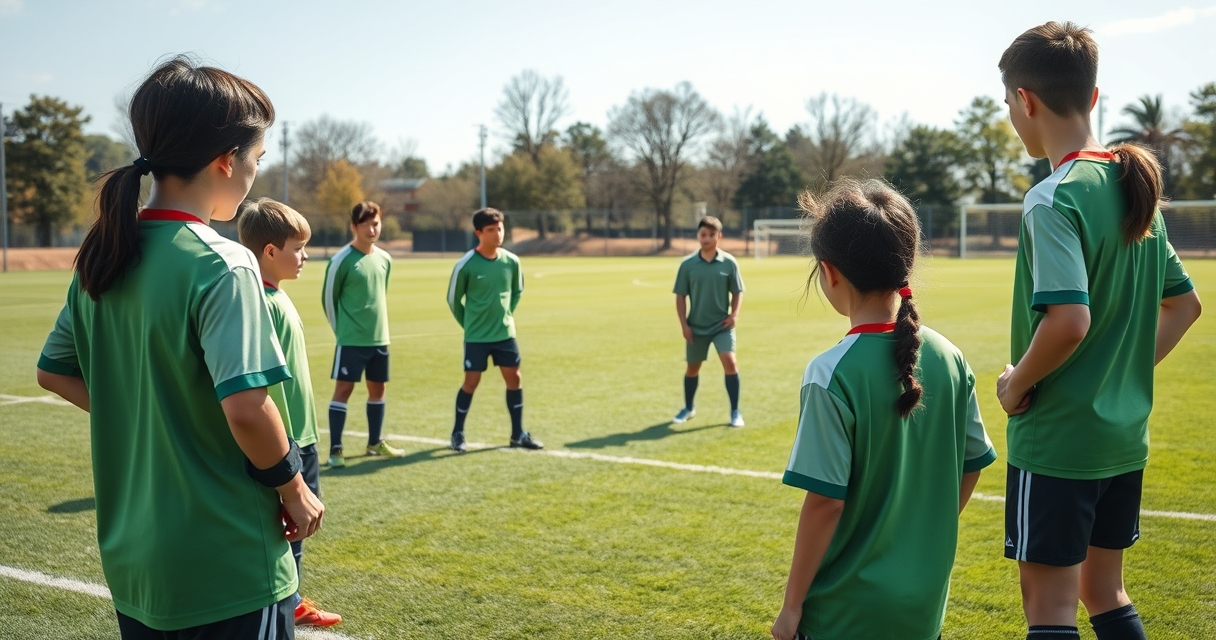
A common symptom of this oversight is the “kick and run” style of play that dominates many youth leagues. Coaches who lack tactical knowledge often default to encouraging players to clear the ball at every opportunity, rather than teaching them how to build possession or press as a unit. This approach might work in the short term, but it creates bad habits that are difficult to unlearn later. For example, a player who spends years booting the ball forward without thinking will struggle to adapt to a possession-based system in high school or college. To combat this, coaches should incorporate small-sided games that force players to solve problems tactically. A 4v4 game with no goalkeepers, for instance, encourages quick passing and movement because the space is limited. Consistent practice of communication drills in soccer sharpens players’ soccer IQ, distinguishing exceptional athletes from merely good ones.
Failing to Balance Technical Skill with Physical Development
Youth soccer training often swings between two extremes: either an overemphasis on technical drills at the expense of physical conditioning, or a focus on fitness that leaves players mechanically underdeveloped. The first scenario is more common, where coaches spend entire sessions on passing, dribbling, and shooting without addressing the physical demands of the game. This creates players who can execute skills in isolation but lack the endurance, strength, or speed to perform them under match pressure. For example, a player might be able to juggle the ball 50 times in training but gas out after 20 minutes of a real game because their aerobic capacity hasn’t been developed. The solution isn’t to turn training into a boot camp, but to integrate physical conditioning into technical drills. Modifying possession drills by incorporating a sprint after each pass exemplifies effective soccer drills progression for skill and fitness enhancement.
The other extreme, overloading young players with fitness work, is equally problematic. Some coaches, particularly in competitive clubs, treat youth training like a scaled-down version of professional sessions, complete with long runs, plyometrics, and weight training. While physical development is important, it must be age-appropriate. For instance, a 10-year-old’s body isn’t ready for heavy squats or marathon-style endurance runs, and forcing these activities can lead to injuries or burnout. Instead, coaches should focus on fun, soccer-specific movements like agility ladders, short sprints, and bodyweight exercises. These activities improve coordination, speed, and strength without overloading developing joints and muscles. The goal is to build athletes who are physically prepared for the demands of the game, not just players who can run fast or kick hard.
Underestimating the Importance of Small-Sided Games
Many youth soccer programs rely too heavily on full-field scrimmages or isolated technical drills, missing the developmental goldmine that is small-sided games. These games, played on reduced spaces with fewer players, force participants to engage with the ball more frequently, make quicker decisions, and develop a deeper understanding of the game’s flow. For example, a 3v3 game on a 20×30-yard field gives each player far more touches, passes, and defensive actions than a traditional 11v11 match. Yet, many coaches default to full-field scrimmages because they resemble “real soccer,” even though they often result in players standing around waiting for the ball to come to them. The data is clear: players in small-sided games touch the ball 3 to 5 times more often than in full-sided matches, and they face more 1v1 situations, which are critical for skill development.
The benefits of small-sided games extend beyond technical skills. They also teach tactical concepts in a way that’s digestible for young players. In a 4v4 game, for instance, players naturally learn about spacing, support, and transition because the reduced space forces them to think and act quickly. Coaches can further enhance these games by adding constraints, like limiting players to two touches or requiring a certain number of passes before shooting. These adjustments create specific challenges that mirror real-game scenarios, such as playing out of pressure or breaking down a compact defense. The key is to use small-sided games not just as a warm-up or cool-down activity, but as the core of training sessions. Clubs that prioritize these games see faster improvements in player decision-making, creativity, and confidence on the ball.
Overlooking the Psychological Aspects of Training
Soccer is as much a mental game as it is a physical one, yet many youth training programs treat psychological development as an afterthought. Coaches often focus on correcting technical or tactical mistakes while ignoring the emotional and cognitive challenges young players face. For example, a player who makes a mistake in a game might become hesitant or frustrated, leading to a downward spiral of poor performance. Without guidance, this player may develop a fear of failure that stifles their growth. The best coaches recognize these moments as opportunities to build resilience, not just correct errors. Simple strategies, like encouraging players to “flush” mistakes and move on to the next play, can help them stay focused and confident. The goal is to create an environment where players feel safe to take risks, make mistakes, and learn from them.

Another psychological pitfall is the pressure to specialize too early. Many youth players are pushed to focus solely on soccer at the expense of other sports or activities, which can lead to burnout or a loss of passion for the game. Research shows that multi-sport athletes often develop better coordination, creativity, and problem-solving skills than those who specialize early. For instance, a player who also plays basketball might develop better spatial awareness, while a swimmer could build superior endurance. Coaches and parents should encourage young athletes to explore other sports, even if it means missing a few soccer practices. The long-term benefits, like reduced injury risk and increased motivation, far outweigh the short-term costs. Additionally, coaches can incorporate mental skills training into their sessions, such as visualization exercises or goal-setting activities, to help players develop the focus and confidence needed to succeed at higher levels.
Relying Too Heavily on Repetition Without Purpose
Repetition is a cornerstone of skill development in soccer, but many youth training programs misuse it by turning drills into mindless exercises. For example, a coach might have players pass back and forth in a straight line for 10 minutes, with no variation or progression. While this might improve passing accuracy, it doesn’t teach players how to apply that skill in a game. The problem is that repetition without purpose creates robotic players who can perform skills in isolation but struggle to adapt them to match situations. The best drills are those that replicate the chaos and unpredictability of real soccer, forcing players to make decisions under pressure. For instance, a passing drill that includes defenders or requires players to move into space after passing is far more effective than a static exercise.
Another issue with repetitive drills is that they can become boring, leading to disengagement. Young players thrive on variety and challenge, so coaches should constantly adjust drills to keep them fresh. One way to do this is by adding constraints or obstacles. For example, a dribbling drill could start with no defenders, then progress to one defender, and finally to a full 1v1 scenario. This gradual increase in difficulty keeps players engaged while also pushing them to improve. Another tactic is to incorporate gamification, such as keeping score or timing players to create a competitive element. The key is to strike a balance between repetition and creativity, ensuring that players develop skills in a way that’s both effective and enjoyable. Coaches who master this balance see faster improvements in their players’ abilities and a higher level of enthusiasm for training.

I’ve been playing soccer since I was a kid and love breaking down drills to help players improve. When I’m not on the pitch, I enjoy analyzing games and sharing practical tips with fellow enthusiasts.