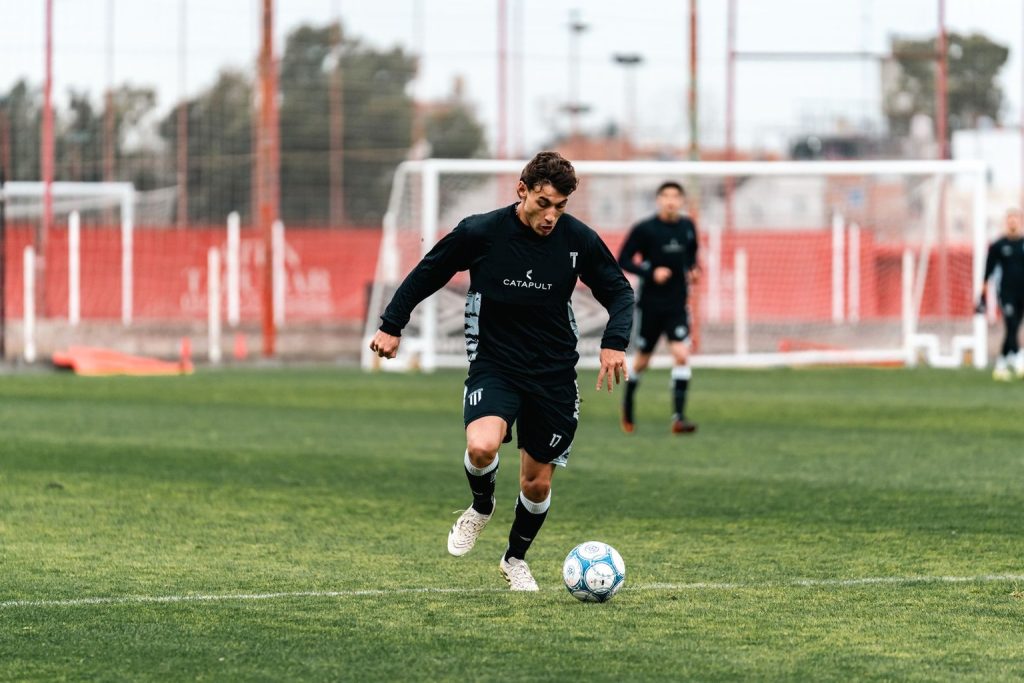
Young players often freeze when the ball arrives, unsure whether to push forward or retreat, a hesitation that costs them possession in critical moments. Coaches who adopt positional play drills for youth soccer address this gap by forcing athletes to read spatial cues rather than rely on instinct or shouted instructions. The core principle is simple: if your team has the ball and numerical superiority in a zone, attack; if you lose it or face inferiority, compress and defend. This decision-making framework, rooted in the tactical traditions of clubs like FC Barcelona and the Spanish national teams, transforms passive participants into active problem solvers on the pitch. By embedding these decisions into repetitive, low-pressure scenarios, coaches build a neural pathway that makes the correct action feel natural even under high game pressure.
The Cognitive Load of Reading Spatial Cues
Human brains process visual information in distinct stages, and young athletes often skip the analysis phase because they are focused entirely on the ball. To fix this, coaches must reduce the cognitive load by controlling variables such as player numbers and field dimensions during training sessions. A well-designed drill might limit a group to five players on a small grid, forcing them to see their teammates’ positions before the ball even moves. This constraint ensures that the player looks up, assesses the space, and only then decides to pass or dribble. Without this specific focus on vision, players develop the bad habit of staring at their feet, which makes it nearly impossible to execute positional play drills for youth soccer effectively in open games.
The concept of “superiority” is the first cue players must learn to identify, defined as having more players than the opposition in a specific area of the pitch. When a midfielder sees two defenders nearby but three teammates supporting the ball carrier, the visual data clearly points toward an attacking option. Coaches should ask simple questions like “Who is closer?” or “Where is the open space?” to guide the player’s thought process without giving them the answer directly. This Socratic method builds independence, ensuring that when the situation changes in a real match, the player can still find the solution without waiting for a whistle. The goal is to make reading these cues as automatic as blinking, removing the mental delay that often leads to turnovers.
Conversely, “inferiority” signals the need to defend by compressing the space and denying the opponent time or room to think. If a defender sees two attackers converging on their zone while their teammate is far away, the correct action is not to chase one player but to drop back and create a compact defensive block. This decision requires spatial awareness of the entire team shape, not just the immediate threat in front of them. Coaches can use colored bibs or cones to visualize these zones, making the abstract concept of superior and inferior numbers tangible. Over time, players begin to scan the field automatically, grouping players into these categories without conscious effort, which is the hallmark of a tactically mature footballer.
Designing Low-Pressure Decision Scenarios
High-intensity games often paralyze young decision makers because the stakes feel too high to make a mistake, leading to safe but unproductive passes. Training environments must strip away this anxiety by using small-sided games with modified rules that reward risk-taking and correct reading. For example, a drill might require a team to score only through a specific zone, forcing them to create superior numbers in that area before advancing. If they lose the ball, the drill resets, teaching them that mistakes are part of the learning process rather than failures. This psychological safety net allows players to experiment with different positional options, gradually building confidence in their ability to choose between attacking and defending actions.
The transition from attack to defense is where most young teams collapse, often because they wait for a whistle or a teammate’s shout before reacting. To bridge this gap, coaches can implement “trigger-based” drills where the change of possession initiates an immediate structural shift. When the team loses the ball, the closest player presses, while others move to cut passing lanes and compact the midfield. This coordinated response must be rehearsed until it becomes reflexive, ensuring that the defensive shape forms before the opponent can launch a counter-attack. The key is timing; players need to understand that the moment of loss is the most critical instant for defensive organization, not ten seconds later when the ball is already clear.
Variability is essential in these scenarios to prevent players from memorizing specific patterns rather than understanding principles. A coach might change the number of attackers, the size of the goal, or the rules for passing after each repetition, forcing the player to re-evaluate the situation from scratch. This mirrors the unpredictability of a real match, where the opponent’s shape changes constantly and no two moments are identical. By exposing players to a wide range of spatial configurations, coaches ensure that their decision-making skills remain adaptable rather than rigid. The aim is to create athletes who can apply positional play drills for youth soccer concepts in any context, whether playing against a high press or a low block.
The Role of Team Shape in Individual Choices
Individual decisions are meaningless without a coherent team structure, as positional play relies on the collective movement of all eleven players to create space. When one player moves forward, others must shift to cover the vacated area, maintaining the balance between attack and defense. Coaches should emphasize this interdependence during training, showing players how their personal choice affects the entire defensive or attacking shape. If a full-back pushes high without support, the center-backs are exposed, creating a vulnerability that the opposition will exploit. Understanding this chain reaction helps players make more responsible decisions, knowing that their actions have consequences beyond their immediate zone.

Compactness is the primary tool for defense, meaning the team must stay close together to reduce the space between lines and limit passing options. In training, coaches can use cones or markers to define the maximum distance allowed between players in possession and those without it. This physical boundary forces the team to move as a unit, sliding left or right based on the ball’s location. Players learn that dropping deep is not a sign of weakness but a tactical necessity when facing superior numbers from the opponent. By mastering this collective movement, teams can suffocate opponents, making it difficult for them to find clear passing routes or shooting angles.
Expanding the shape during attack is the mirror image of compactness, where players stretch the pitch to create overloads and open spaces for penetration. When the team has the ball, the wingers and full-backs push wide, while the center-midfielders drift forward to offer passing options in the half-spaces. This expansion creates numerical superiority in key zones, forcing the opposition to defend in a stretched and vulnerable position. The challenge for young players is knowing when to expand and when to stay compact, a decision that depends entirely on the current game state. Coaches can use video analysis to show how top teams manage this balance, highlighting the subtle cues that trigger each structural change.
Common Errors in Transition Phases
One of the most frequent mistakes in youth soccer is the “static defense,” where players wait for the ball to come to them rather than actively pressing and closing down. This passive approach allows opponents to play short passes under pressure, eventually breaking the defensive line through simple movement. To correct this, drills must emphasize proactive pressing, where the nearest player closes the passer quickly while teammates cover the passing lanes behind. The focus should be on timing rather than speed, teaching players to press at the right moment to force a turnover or a long, inaccurate ball. This active approach disrupts the opponent’s rhythm and creates opportunities for quick counter-attacks.
Another common error is the failure to recover position after a lost tackle, leaving the player out of play and exposing the team to danger. In positional play, every action must be followed by an immediate return to the correct shape, ensuring that the defensive structure remains intact even after a mistake. Coaches can design drills where players must complete a defensive action and then quickly move to a pre-defined recovery zone. This habit builds discipline and ensures that one lost ball does not lead to a goal, as the team remains organized and ready to counter. The emphasis should be on speed of thought and movement, rather than just physical intensity.
Over-commitment in attack is another trap, where players push too high without sufficient support behind them, leading to easy turnovers and counter-attacks. To mitigate this, coaches should limit the number of players who can push forward at any given time, ensuring that a defensive core remains in place. For example, only two out of five midfielders may advance, while the other three stay back to cover the space. This constraint teaches players to be selective with their runs, understanding that not every opportunity requires a full-team surge. The result is a more balanced approach that minimizes risk while still creating attacking threats.
Age-Appropriate Complexity Progressions
Younger players, typically under the age of ten, benefit from simplified drills that focus on basic superior and inferior numbers without complex team shapes. At this stage, the goal is to develop the habit of looking up and making quick decisions in one-on-one or two-on-two situations. Coaches should avoid overwhelming these players with too many variables, keeping the focus on clear visual cues and immediate actions. As players mature, the complexity can increase by adding more opponents, larger fields, and stricter rules about positional discipline. This gradual progression ensures that each skill is mastered before moving to the next level, preventing frustration and burnout.

For intermediate players, around ages eleven to thirteen, the focus shifts to small-sided games with defined zones and objectives that require coordinated team movement. These players are capable of understanding more abstract concepts like compactness and expansion, making them ready for drills that simulate real match scenarios. Coaches can introduce tactical questions during training, asking players to explain their decisions after a loss of possession or a successful goal. This reflective practice helps solidify the connection between theory and practice, turning intuitive actions into conscious tactical choices.
Advanced youth teams, from age fourteen upwards, should engage in full-sided positional play drills for youth soccer that replicate the complexity of competitive matches. At this level, players are expected to make independent decisions based on a shared understanding of the team’s principles and styles. Coaches can use video analysis to review specific moments, highlighting how individual choices impacted the overall game flow. This level of sophistication requires a high degree of trust between players and coaches, as well as a strong emphasis on communication and mutual support. The result is a team that functions as a cohesive unit, capable of adapting to any tactical situation.
Integrating Positional Play into Weekly Schedules
Consistency is key to embedding positional play concepts into a team’s DNA, requiring dedicated time in every training session rather than sporadic workshops. Coaches should structure their weekly plans to include at least two specific drills focused on decision-making and spatial awareness, interspersed with technical and physical work. This regular exposure ensures that the concepts remain fresh in players’ minds, gradually becoming part of their natural game behavior. The key is to maintain variety within this consistency, changing the drills regularly to keep players engaged and challenged.
Match days offer a unique opportunity to reinforce these principles, as coaches can pause play to discuss specific moments where positional decisions were made well or poorly. These in-match discussions help players see the direct link between training drills and real-game outcomes, increasing their motivation to apply what they have learned. Coaches should focus on positive reinforcement, highlighting instances where players correctly read the situation and executed the appropriate action. This feedback loop strengthens the neural pathways associated with positional play, making correct decisions more likely in future matches.
Finally, communication between coaches and parents is essential for supporting this developmental approach, as many adults may still value physical dominance over tactical understanding. Explaining the long-term benefits of positional play, such as improved decision-making and adaptability, helps align everyone around the same goals. When parents understand that their children are being trained to think like professionals, they become allies in the process, encouraging patience and persistence. This holistic approach ensures that the focus remains on player development rather than short-term results, creating an environment where young athletes can truly thrive.

I’ve been playing soccer since I was a kid and love breaking down drills to help players improve. When I’m not on the pitch, I enjoy analyzing games and sharing practical tips with fellow enthusiasts.