

Teaching ball control to young players requires patience, structure, and an understanding of how children learn motor skills. In the competitive landscape of youth development, coaches often seek efficient methods to maximize limited training time. The modern approach emphasizes short, focused sessions that keep attention spans engaged while delivering technical repetition. This guide explores practical methodologies for instilling fundamental touch and mastery, proving that quality over quantity defines effective early learning environments.
Structuring the Session for Maximum Engagement
The first factor in any successful drill is the organization of the practice space, quick ball control drills for youth soccer. Young athletes thrive on predictability; therefore, setting up cones, markers, and goals before the players arrive minimizes transition time and maintains momentum. A typical session might begin with a dynamic warm-up that incorporates the ball, such as gentle taps while moving, to awaken the nervous system and prepare the feet for more complex tasks. This initial phase sets the tone, signaling that the ball is an extension of the body rather than an object to be feared. Coaches should ensure that the distance between markers is age-appropriate, allowing for success before introducing challenge.
Progression is the engine of skill acquisition, and it must be visible to the learner. Starting with stationary touches allows the child to focus on surface area, inside, outside, and sole, without the pressure of movement. Once comfort is established, introducing a partner or a moving target shifts the cognitive load. For instance, a simple “follow the leader” exercise where the coach demonstrates a move and the child mimics it fosters observational learning. The key is to celebrate the attempt, not just the perfect execution, creating a safe space for experimentation and error correction.
Integrating Fun Through Gamified Repetition
Children are naturally drawn to competition and play, making gamification a powerful tool in the coach’s arsenal. Transforming a technical drill into a story or a challenge leverages intrinsic motivation. A drill might involve “treasure hunting” where players dribble through a maze of cones to collect colored balls, combining agility with close control. This approach moves the focus away from the mechanics of “correct form” and toward the enjoyment of the movement itself. When the fun factor is high, the repetition necessary for muscle memory occurs organically.
Timed challenges add an element of excitement without sacrificing technical development. For example, setting a timer for thirty seconds and asking how many successful passes against a wall a player can complete turns a mundane task into a race against the clock. This method teaches players to maintain quality under pressure, a skill that translates directly to match situations. However, the coach must balance the desire for speed with the need for proper technique, gently correcting form when the rush leads to sloppy touches. The goal is to build confidence through achievable goals.
Utilizing Space Efficiently With Constrained Games
Small-sided games are the bridge between isolated drills and full-scale match play. By reducing the playing area, players are forced to make quicker decisions and maintain closer control of the ball. A 3v3 or 4v4 format in a confined space ensures that every participant has frequent contact with the sphere, which is the cornerstone of developing touch. The reduced space eliminates the luxury of running long distances with the ball, compelling the player to use skillful manipulation and tight turns to navigate opponents.
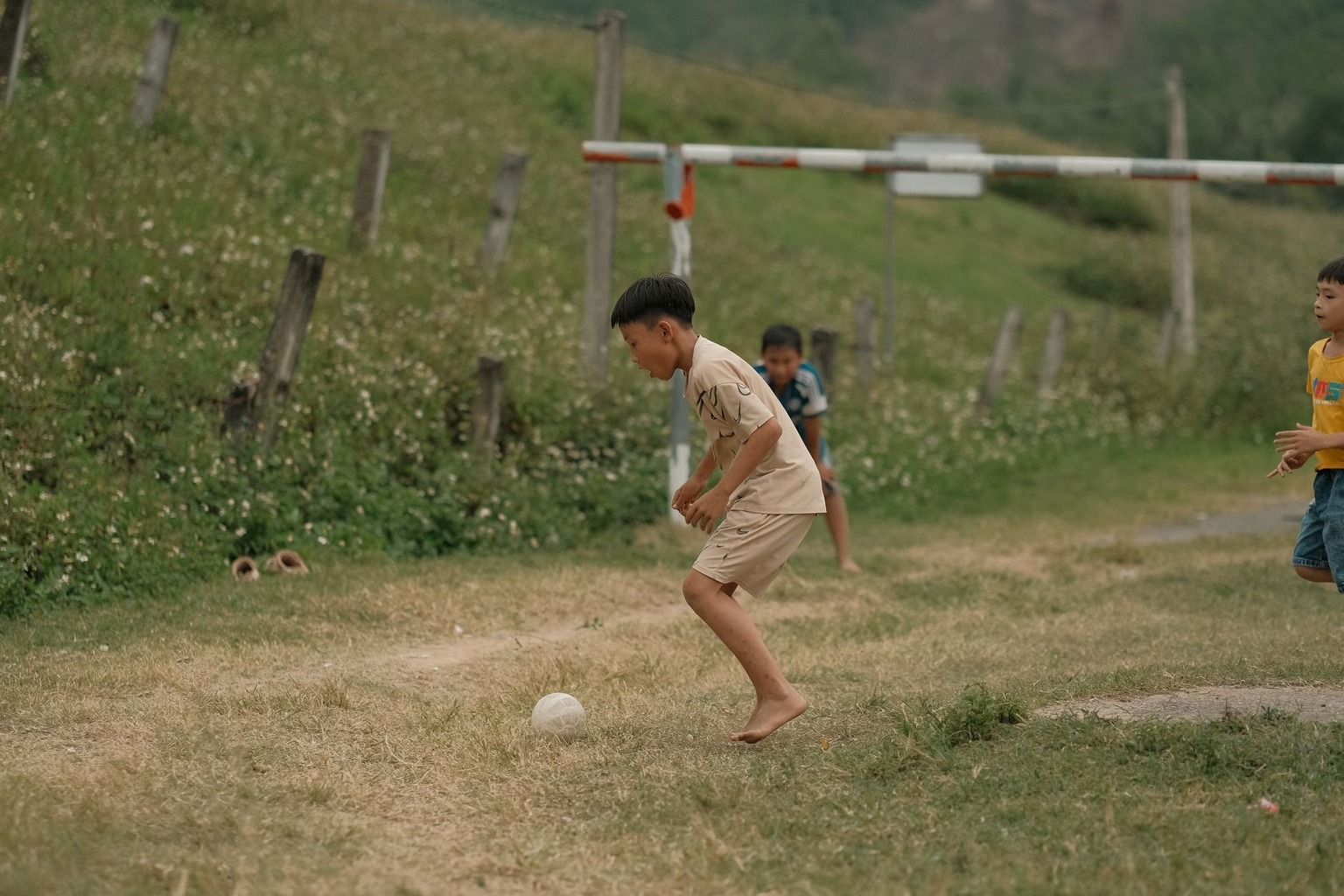
These constrained environments also teach spatial awareness, a critical component of ball mastery. Players learn to scan the field, identify passing lanes, and protect the ball under pressure. A practical exercise might involve creating “zones” where players must stop the ball completely before moving into a new area, reinforcing the concept of body positioning. The coach’s role here is to facilitate, stepping in only to redirect play or praise clever problem-solving. This autonomy encourages the child to think creatively about how to solve the puzzle of the drill.
Developing Weak Foot Proficiency Early
One of the most common asymmetries in young players is the reliance on the dominant foot. Early intervention is crucial to prevent the development of a “weak side” that becomes a liability in later years. Drills specifically designed to force the use of the non-dominant foot should be introduced gradually. Starting with simple passes against a wall using only the left or right foot builds familiarity. As confidence grows, the complexity can increase to include dribbling circuits that weave exclusively with the weaker foot.
The psychological aspect of weak foot training cannot be overlooked. Many children feel a sense of failure or awkwardness when forced to use their less capable side. The coach must frame these exercises as “building the other leg’s strength” rather than a punishment for being “bad” with that foot. Positive reinforcement, such as acknowledging a successful left-footed dribble, shifts the narrative from deficit to development. Over time, this balanced approach produces ambidextrous players who can operate effectively from any angle on the pitch.
Feedback Loops and Parental Involvement
The feedback mechanism is the connective tissue between the drill and the skill. Immediate, specific feedback helps the child link the action with the result. Instead of a generic “good job,” a coach might say, “I loved how you used the inside of your foot to stop that ball.” This specificity guides the player’s next attempt. Furthermore, involving parents in the process extends the learning environment beyond the training ground. Simple homework assignments, like practicing toe taps while watching television, reinforce the habits being built during the two or three weekly sessions.
However, the coach must educate parents on the volume and nature of home practice. Overloading a young athlete with technical drills at home can lead to burnout or the development of poor habits if unsupervised. The recommendation is usually short, frequent sessions of five to ten minutes, focusing on one specific skill at a time. This “little and often” approach aligns with the developmental capacity of children, ensuring that the love for the game remains intact while the technical foundation solidifies. The partnership between coach and parent is vital for holistic development.
Measuring Progress Without Overburdening the Child
Assessing progress in youth soccer should be subtle and encouraging, avoiding the pressure of grades or scores that can dampen enthusiasm. One effective method is the “skill checklist,” where a player can tick off milestones such as “can dribble through five cones without stopping” or “can juggle the ball ten times.” These tangible markers provide a sense of achievement and allow the coach to identify areas needing more focus. It transforms the abstract concept of “getting better” into concrete, visible progress.
Another nuance is the observation of decision-making during games. A player may have perfect ball control in a drill but hesitate during a match due to anxiety or lack of tactical understanding. Therefore, the coach should look for improvements in confidence and willingness to take risks with the ball. Tracking the number of times a player attempts a dribble in a game, regardless of success, is a valid metric of growing comfort. The ultimate goal is to foster a player who loves the ball at their feet and feels empowered to use it in any scenario.

I’ve been playing soccer since I was a kid and love breaking down drills to help players improve. When I’m not on the pitch, I enjoy analyzing games and sharing practical tips with fellow enthusiasts.