Coaching an attacking unit requires breaking down compact defensive blocks through intentional movement and precise passing combinations. Every coach faces the challenge of unlocking a stubborn backline that leaves minimal room between the midfield and defensive units. Players need specific training exercises that teach them how to manipulate defenders and open up passing lanes. Designing proper practice sessions involves understanding the core principles of width, depth, and sudden changes of pace. The seven specific training exercises detailed below offer concrete solutions for coaches aiming to improve their team’s spatial awareness and ball progression.
Selection Criteria for Offensive Training Exercises
Choosing the right practice activities depends heavily on the specific tactical weaknesses of the opposing team you face on matchday. Coaches must evaluate their squad’s technical level and physical capacity before introducing complex tactical constraints to the session. A good training session always replicates real match conditions by including realistic pressure and directional goals. You should look for setups that force players to scan the field constantly and recognize visual cues from teammates. Building an effective progression means starting with passive opposition and gradually adding full defenders to test decision-making under stress.
Every chosen activity needs to have clear scoring conditions that reward intelligent movement rather than just raw shooting power. If a setup fails to generate high repetition of the desired attacking pattern, the coach must adjust the grid dimensions. Small sided games with floating neutral players offer a fantastic way to overload specific zones on the pitch. Coaches should also monitor physical fatigue levels because mental sharpness drops quickly when players are constantly chasing the ball. Selecting appropriate variations ensures that every athlete remains engaged and understands the broader tactical objectives of the session.
The Diamond Overload Passing Circuit
This technical exercise focuses on establishing passing triangles in central areas to disorganize the opponent’s midfield shield. Players set up in a diamond formation with a central pivot who acts as the bouncing board for quick wall passes. The main objective is to rotate the ball rapidly from one side of the diamond to the opposite flank. Athletes learn to check their shoulders before receiving the ball so they can play forward on the half turn. Tempo changes are essential here because a slow passing rhythm allows recovering defenders to slide across and close gaps.
Executing this pattern correctly requires precise weight of pass and proper body shape from the receiving player. Coaches often demand that passes are played into the back foot to maintain momentum and protect the ball from pressure. Adding a passive defender forces the central receiver to time their movement and create space before the ball arrives. As players master the basic passing sequence, the coach can introduce a live defender to create a two versus one situation. This progression bridges the gap between static passing drills and dynamic match situations where opponents actively contest every ball.
Flank Overload and Underlapping Runs
Modern tactics rely heavily on creating numerical superiorities on the wings to pull central defenders out of position. This specific exercise takes place in a wide channel measuring thirty by twenty yards with two attacking wingers facing a defender. The central midfielder feeds the ball wide to initiate a sequence where the winger dribbles inside to draw the marker. This inside movement triggers an underlapping run from the full back who bursts into the penalty box. Timing is everything in this scenario because a premature run allows the defender to recover and block the cross.
On the Pelota Academy – Pro Footballer Skills channel, they cover striker movement and final third attacking, and you can watch it right here.

Players must communicate clearly using visual and verbal cues to ensure the timing of the underlapping run matches the dribbler’s pace. The supporting midfielder must also fill the vacant space left by the advancing full back to maintain structural balance. Coaches should emphasize the quality of the final delivery into the box, targeting specific zones rather than just crossing blindly. Repeating this wide combination pattern builds automatic understandings between teammates who occupy adjacent positions on the field. Defensive pressure should increase gradually until the wide pairing faces a full defensive unit in a realistic match simulation.
Third Man Combinations in Tight Central Zones
Breaking down a low block demands exceptional coordination between central midfielders and advancing forwards using third man runs. The setup involves a central grid where three attackers face two defensive midfielders and a center back. The first player passes to the second player, which triggers a blindside run from the third player. Because the defense shifts focus toward the direct receiver, the third player emerges unmarked in open space behind the block. This clever deception turns a simple square pass into a lethal progression through the heart of the defense.
Mastering this concept requires immense patience and the ability to disguise passing intentions with clever body feints. The intermediate player must resist the urge to turn into trouble and instead bounce the ball with one touch. Coaches need to stop the session immediately if the passing tempo drops or if players fail to scan the surrounding area. Setting up miniature goals at the end of the central grid encourages the final recipient to finish quickly after receiving the pass. Integrating these third man movements into regular training helps players recognize similar openings automatically during competitive weekend matches.
Positional Rondo with Directional Goals
Standard rondos are great for keeping possession, but adding directional goals transforms them into powerful attacking simulations. A four versus four setup with two neutral wall players challenges the team in possession to break lines and score. Attackers earn bonus points if they successfully utilize the neutral players to switch the point of attack rapidly. The defenders must remain compact and shift collectively as the ball moves from one side of the grid to another. This constant shifting creates fatigue, which eventually leads to momentary lapses in concentration and defensive gaps.
Players learn to recognize when to circulate possession safely and when to play a penetrative vertical pass through the defense. The coach can impose touch restrictions, such as limiting players to two touches, to encourage quick thinking and spatial awareness. If the defensive team wins possession, they must try to score in two small counter goals within five seconds. This quick transition element teaches attacking players to recover immediately and prevent dangerous counter attacks if they lose the ball. The competitive nature of this directional rondo keeps intensity high and mirrors the emotional pressure of league matches.
Switching Play via the Deep Playmaker
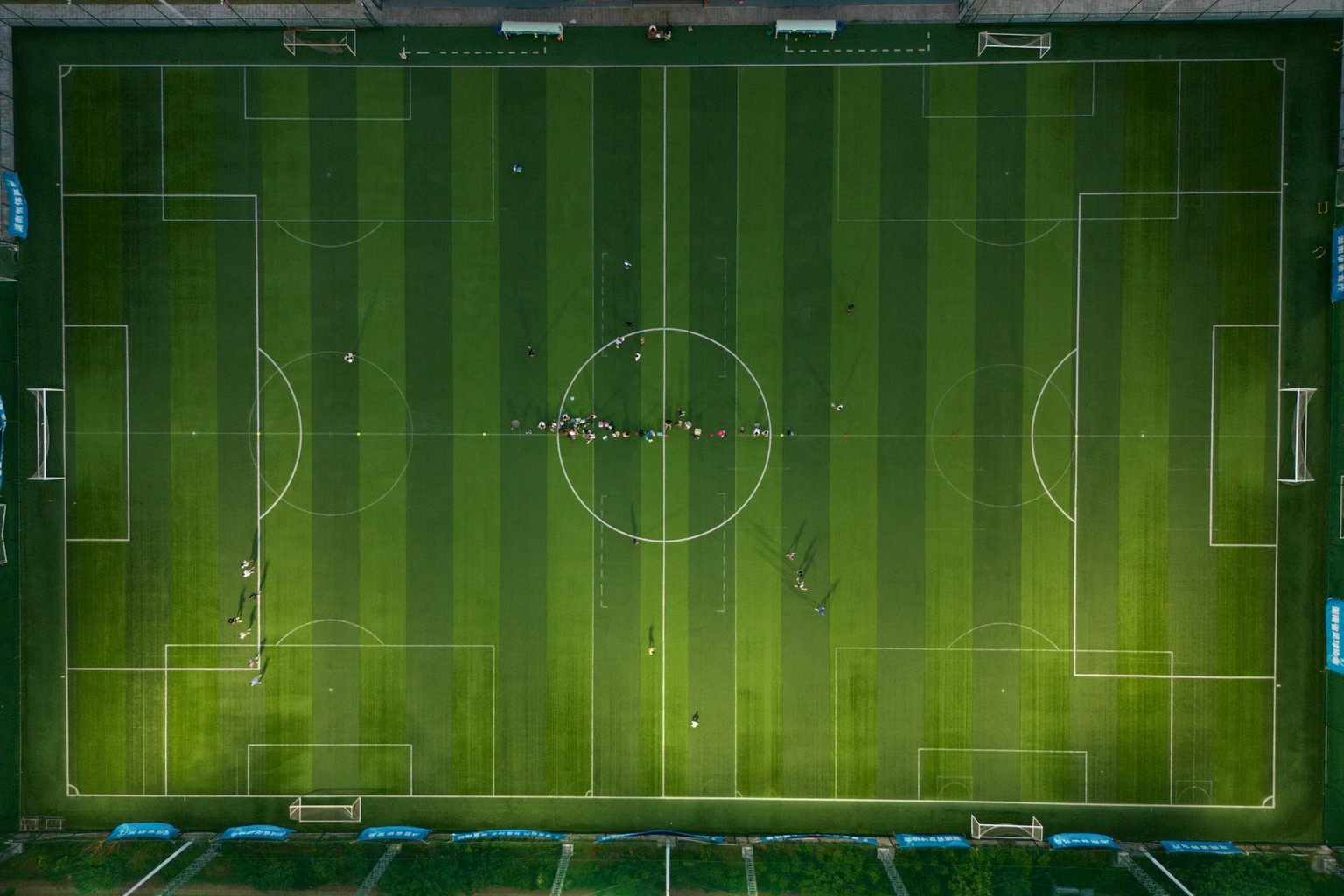
Exploiting a shifting defense often requires a rapid switch of play from one flank to the opposite side of the pitch. This exercise utilizes a long rectangular grid that stretches across the entire width of the central midfield zone. A deep lying playmaker controls the tempo, receiving square passes from one side before launching diagonal balls outward. The receiving winger must stay pinned to the touchline initially to stretch the opponent’s defensive line horizontally. Once the ball is in flight, the winger explodes inward to attack the space behind the full back.
Accuracy over long distances is the primary technical focus for the player distributing the ball across the field. Receivers must practice chesting or cushioning driven diagonal passes instantly to maintain forward momentum without breaking stride. Defenders naturally lean toward the side of the ball, leaving the far side vulnerable to quick switches of direction. Introducing an active pressing midfielder forces the deep playmaker to scan early and release the ball before pressure arrives. Replicating this wide switch regularly in training gives teams a reliable method for unbalancing well organized defensive formations.
Breaking the Defensive Line Through Combination Play
The final phase of attacking training focuses on combining in tight spaces right on the edge of the penalty area. Three attackers face two central defenders and a goalkeeper inside a restricted zone near the top of the box. The goal is to execute quick one-two passing combinations or blindside turns to create a clear shot on goal. Defenders are permitted to slide and tackle aggressively, which forces attackers to protect the ball using their bodies. Quick decision making and ruthless efficiency in front of goal are the ultimate measures of success here.
Every attacking movement must be sharp and purposeful because defenders in this zone give very little time and space. Players learn to use subtle body drops and shoulder feints to unbalance the marker before releasing a teammate on goal. The supporting players must anticipate rebounds and loose balls to keep the pressure sustained on the defensive unit. Coaches should vary the starting positions of the attackers to simulate different transition moments from midfield. Practicing these clinical combinations repeatedly ensures that players remain composed and decisive when genuine scoring opportunities arise.

I’ve been playing soccer since I was a kid and love breaking down drills to help players improve. When I’m not on the pitch, I enjoy analyzing games and sharing practical tips with fellow enthusiasts.