Tracking development in youth soccer drills demands a shift away from vague notions of “hard work” toward specific, observable metrics that reflect technical growth on the pitch. Coaches often rely on gut feeling to determine if a player is improving, but this subjective approach frequently misses subtle regressions or plateaus that hinder long-term progress. A structured measurement system allows you to quantify improvements in ball control, decision-making speed, and spatial awareness with the same precision used in professional academy environments. By establishing clear benchmarks at the start of a training block, you create a transparent roadmap that guides both your coaching decisions and the player’s personal development trajectory. This approach aligns with modern pedagogical standards in football education, where data-driven insights replace guesswork to ensure every minute of practice yields measurable returns.
Defining Baseline Metrics for Technical Skills
Before you can measure improvement, you must establish a concrete baseline that captures the player’s current abilities in key technical areas. This involves recording specific performance indicators during initial assessment sessions, such as the number of successful first touches under pressure or the accuracy rate of short passes over a set distance. For example, if a midfielder struggles with receiving the ball while being chased, you might record their success rate across ten attempts, noting whether they turn away from the opponent or maintain possession. These numbers serve as your starting point, providing an objective reference against which future performance can be compared without emotional bias clouding the judgment.
Selecting the right baseline metrics requires focusing on skills that are directly transferable to match play rather than isolated party tricks. Prioritize fundamental actions like controlled stops, one-touch combinations, and directional changes, as these form the building blocks of effective football performance. Avoid overly complex drills that do not reflect game situations, as they may produce impressive numbers without translating to real-world improvement. The goal is to create a snapshot of the player’s technical proficiency that is simple enough to track consistently yet detailed enough to identify specific areas needing attention during subsequent training sessions.
Consistency in how you capture these baseline data points is critical to ensuring their validity over time. Use the same drill setups, field dimensions, and environmental conditions whenever possible to minimize external variables that could skew the results. If you are measuring passing accuracy, keep the target zone size constant and ensure the surface conditions remain similar across multiple testing dates. This level of standardization allows for a fair comparison between sessions, helping you distinguish genuine skill development from random fluctuations caused by fatigue or weather changes.
Implementing Video Analysis for Tactical Awareness
Video analysis offers a powerful method for assessing tactical understanding and decision-making capabilities that are difficult to measure through physical drills alone. Record short segments of small-sided games or specific drill scenarios where players must make quick choices under pressure, such as deciding whether to pass, shoot, or dribble in tight spaces. Review these clips with the player, pausing at key moments to discuss their reasoning and alternative options they could have considered. This reflective process not only highlights areas for improvement but also encourages self-awareness, a crucial component of long-term tactical development in modern football education.
When evaluating video footage, focus on specific behavioral markers rather than general impressions of performance. Look for patterns in body positioning, scanning frequency, and the timing of decisions relative to receiving the ball. For instance, note how often a player checks their shoulder before receiving a pass or how quickly they react to an opponent closing down their space. These micro-actions provide concrete evidence of tactical growth that complements physical metrics, offering a holistic view of the player’s cognitive development alongside their technical execution.
Integrate video review sessions into your regular training schedule to make them a consistent part of the learning process rather than an occasional special event. Limit each session to a manageable duration, perhaps fifteen to twenty minutes, to maintain the player’s engagement and prevent information overload. Use clear, positive language when discussing observations, framing corrections as opportunities for refinement rather than failures. This supportive approach fosters a constructive environment where players feel safe to experiment and learn from mistakes, ultimately accelerating their tactical maturation.
Tracking Physical Development with Wearable Tech
Wearable technology provides objective data on physical exertion, recovery status, and movement patterns that directly impact on-pitch performance. Devices such as GPS vests can track distance covered, sprint counts, and acceleration/deceleration events during training sessions, offering insights into the player’s physical workload and conditioning levels. By monitoring these metrics over several weeks, you can identify trends in fatigue accumulation or recovery efficiency, allowing you to adjust training loads accordingly to prevent overtraining injuries common in youth athletes.
To learn more about tracking your athletic development, you can watch this review of the STATSports Academy GPS tracker by Best Buys Reviewed Health right here.
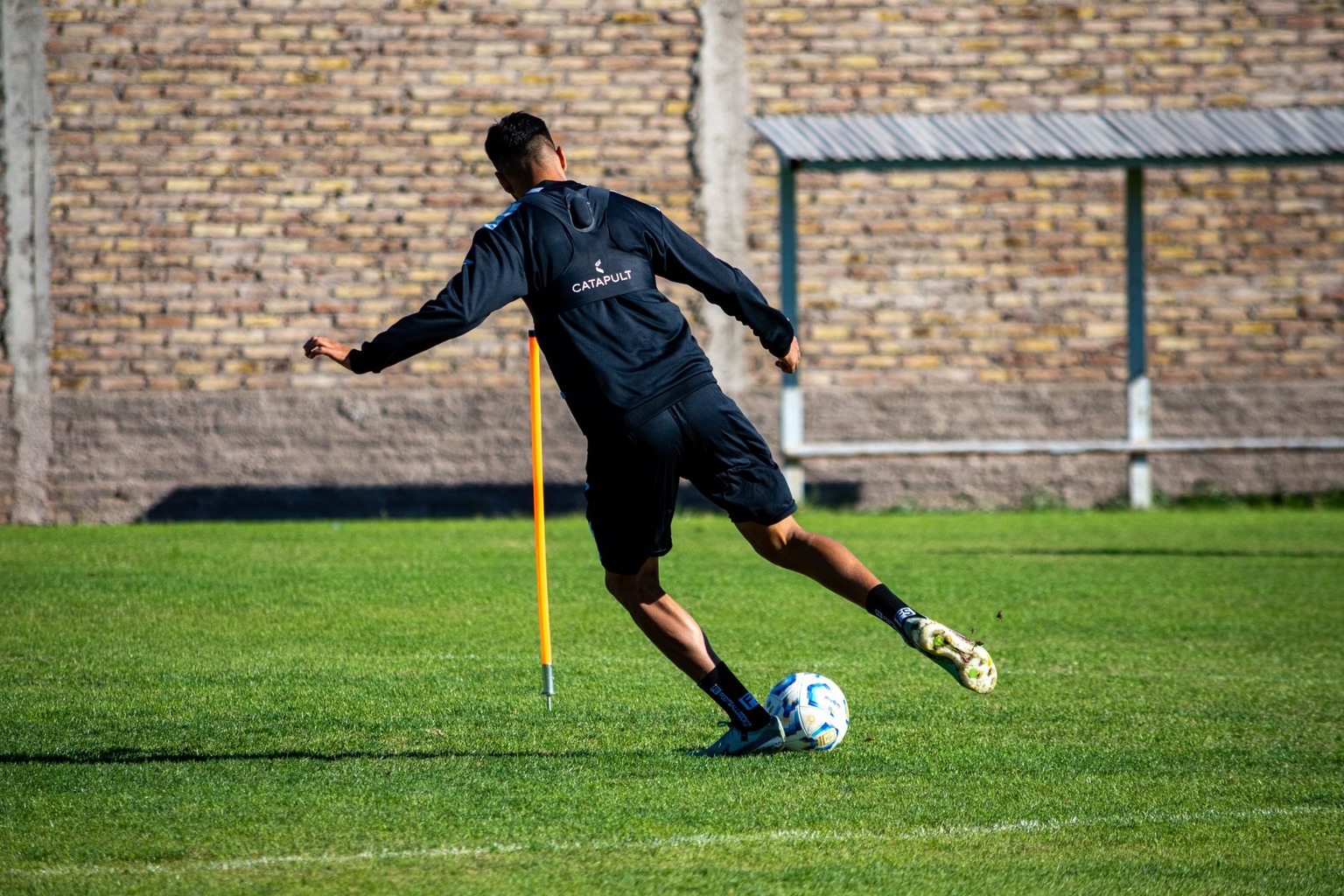
Interpreting wearable data requires context, as raw numbers alone do not tell the whole story of a player’s physical development. Compare individual metrics against team averages or age-appropriate benchmarks to gauge relative performance levels. For example, a player who consistently covers less distance than their peers during high-intensity drills may need additional conditioning work or technique adjustments to improve movement efficiency. Use this data to tailor individualized training plans that address specific physical weaknesses while leveraging the player’s natural strengths.
Ensure that wearable devices are calibrated correctly and worn consistently to maintain data accuracy across all sessions. Establish clear protocols for when and how to collect data, such as during specific high-intensity intervals or full training blocks, to ensure comparability over time. Communicate findings from these devices to players in simple terms, focusing on actionable insights like improving sprint recovery speed or enhancing balance stability. This transparency helps players understand the connection between their physical efforts and their on-field capabilities, motivating them to engage more fully in conditioning activities.
Evaluating Cognitive Decision-Making Speed
Cognitive processing speed is a critical factor in high-level football performance, influencing how quickly players perceive game situations and execute appropriate responses. Design specific cognitive drills that test reaction time under varying levels of distraction and pressure, such as identifying the correct passing lane among multiple defenders within a set timeframe. Measure the average response time across repeated trials to establish a baseline for mental quickness, recognizing that faster processing often correlates with better ball retention and fewer turnovers in competitive settings.
Assessing decision-making quality involves analyzing not just speed but also the appropriateness of choices made in complex game scenarios. Use scenario-based exercises where players must select the best option from multiple possibilities, such as choosing between a long diagonal pass or a short combination play based on defender positioning. Evaluate their selections against ideal tactical outcomes to determine the accuracy of their judgment, providing feedback that reinforces sound reasoning and discourages impulsive actions that lead to poor results.
Incorporate cognitive training elements into regular technical sessions to develop mental agility alongside physical skills. For instance, add verbal cues or visual signals during dribbling drills that require players to change direction instantly upon command, combining physical execution with rapid information processing. Track improvements in both the speed and accuracy of these responses over time, noting any correlations between enhanced cognitive performance and better technical execution under pressure. This integrated approach ensures that mental sharpness becomes an intrinsic part of the player’s overall game intelligence.
Monitoring Consistency Across Training Cycles
True progress in football training is reflected not only in peak performance but also in the consistency of skill execution over extended periods. Track the same core technical drills weekly or bi-weekly to observe how reliably players can perform specific actions under consistent conditions. A player who can execute a perfect first touch only occasionally may still be developing reliability, whereas one who performs it successfully in most attempts demonstrates greater mastery and readiness for higher-level challenges.
Analyze consistency data by comparing performance across different training cycles to identify patterns of stability or decline. If a player’s passing accuracy drops significantly during later parts of the session, it may indicate issues with fatigue management or mental focus rather than a lack of fundamental skill. Use these insights to adjust training intensity or incorporate recovery strategies that help maintain high levels of technical execution throughout entire sessions, ensuring that performance remains steady even when physical demands increase.
Document instances of consistent improvement in your coaching records to build a comprehensive history of each player’s development trajectory. Highlight specific dates where a player successfully completed a previously difficult drill without errors, marking these as milestones in their growth journey. This longitudinal view helps you recognize gradual improvements that might be overlooked in single-session assessments, providing a more accurate picture of long-term progress and reinforcing the value of sustained effort over time.
Adjusting Drills Based on Measured Gaps
Data collected from various measurement methods should directly inform adjustments to your training curriculum to address specific skill gaps identified in players. If metrics reveal a recurring weakness in left-footed passing, design additional drills that focus exclusively on that technique until the accuracy rate improves to acceptable levels. This targeted approach ensures that training time is spent efficiently on areas that genuinely need development rather than practicing skills that are already well-established and mastered.
Modify drill complexity gradually based on measured performance thresholds to maintain an optimal challenge level for each player. For example, if a player achieves 90% success rate in a basic dribbling course, introduce tighter space or faster opponents to increase difficulty and continue pushing their limits. Conversely, if performance drops below 70%, simplify the drill parameters temporarily to allow for successful repetitions that build confidence and reinforce correct mechanics before reintroducing complexity.
Communicate these adjustments clearly to players, explaining how specific drills address their individual needs and contribute to their overall development goals. Encourage them to view changes in training structure as opportunities for growth rather than punishments for poor performance. This transparent dialogue helps maintain motivation and engagement, ensuring that players remain committed to the rigorous process of continuous improvement required to reach their full potential in football.
Common Mistakes in Progress Assessment
One frequent error in measuring training progress is relying solely on single-session outcomes without considering the broader trend over time. A poor performance in one drill does not necessarily indicate a lack of development, especially if external factors like fatigue or distraction were present. Instead, look at the aggregate data across multiple sessions to identify consistent patterns that reflect genuine skill changes, avoiding hasty judgments based on isolated incidents that may not represent the player’s true capability.
Another common pitfall is neglecting to update baseline metrics as players improve, leading to stagnant assessment standards that no longer challenge their abilities. As skills develop, the criteria for success should evolve to match the player’s growing proficiency, ensuring that measurements remain meaningful and motivating. Failing to adjust these benchmarks can result in inflated progress reports that do not reflect real-world readiness, creating a false sense of security that hinders further development.
Finally, avoid using measurement tools that are too complex or burdensome for regular implementation, as this often leads to inconsistent data collection and eventual abandonment of the system. Keep your assessment methods simple, quick, and integrated into natural training flows so they do not feel like separate tasks disconnected from practice. The most effective measurement systems are those that provide useful insights with minimal disruption to the flow of coaching, allowing you to focus on teaching while still capturing the data needed to track meaningful progress.

I’ve been playing soccer since I was a kid and love breaking down drills to help players improve. When I’m not on the pitch, I enjoy analyzing games and sharing practical tips with fellow enthusiasts.