

The debate between technical and tactical training in youth soccer isn’t just about which approach is better, it’s about how to balance them for long-term development. Research shows that young players benefit most when both skills are integrated early, but many coaches still default to one over the other. The truth is, technical mastery lays the foundation for tactical understanding, while tactical awareness sharpens technical execution. For youth coaches, the challenge is figuring out when to prioritize drills that refine ball control versus sessions that teach positional play. This isn’t an either-or scenario; it’s about sequencing and context. Below, we’ll break down how to structure training to ensure both aspects progress together, avoiding the pitfalls of overemphasizing one at the expense of the other.
Understanding the Core Differences Between Technical and Tactical Training
The distinction between technical and tactical training in youth soccer isn’t always clear-cut, but it’s critical to address them separately before blending them. Technical training focuses on the how, the mechanics of ball control, passing accuracy, and dribbling efficiency. This is where players learn to use their feet, heads, and bodies with precision. Tactical training, on the other hand, deals with the why, how players make decisions in space, when to pass, when to hold the ball, and how to position themselves relative to teammates and opponents. One without the other leaves players either mechanically sound but tactically clueless or creatively aware but technically inconsistent.
For young players, technical skills are easier to quantify and teach. A 10-year-old can be drilled on perfecting their first touch or mastering a step-over move in isolation. Tactical awareness, however, requires context, players need to understand why they’re making a move, not just how to execute it. Studies from the English Football Association’s Long-Term Player Development framework highlight that technical skills develop rapidly between ages 8 and 12, while tactical cognition matures more slowly, peaking around late adolescence. This means that while technical drills can be repetitive, tactical training must evolve as players grow older and their decision-making abilities sharpen.
The mistake many youth coaches make is treating these two domains as interchangeable. A common error is using small-sided games as purely tactical exercises when they’re actually technical in nature, players are still refining their passing and shooting under pressure, not just learning positional play. Conversely, isolating technical drills without linking them to game scenarios creates players who can’t apply their skills when it matters. The key is to design sessions where technical precision enables tactical execution, not the other way around.
Assessing Your Players’ Current Skill Levels Before Deciding on a Focus
Before designing a training program, you need to know where your players stand technically and tactically. This isn’t about labeling them as “good” or “bad”, it’s about identifying gaps that will dictate your training priorities. For technical skills, observe their ball control under pressure, their ability to receive and pass accurately, and how quickly they recover their balance after a challenge. For tactical awareness, watch how they space themselves in open play, whether they make intelligent runs, and if they understand basic principles like width and depth.
A simple diagnostic tool is to run a 5v5 scrimmage with minimal rules and see how players adapt. If they struggle to maintain possession or make predictable passes, their technical skills may need reinforcement. If they hover in the middle of the field or fail to exploit space, their tactical understanding is likely underdeveloped. Research from the International Journal of Sports Science & Coaching suggests that players under 12 often default to technical solutions in high-pressure situations because their tactical instincts aren’t fully formed. This means you’ll need to structure drills that force them to think while moving.
The danger here is assuming all players are at the same stage. A 9-year-old with advanced technical skills might still lack tactical awareness, while a player with average ball control could be making surprisingly smart decisions in open play. Grouping players by age alone isn’t enough, you need to assess their individual development. One effective method is to use a simple rating scale (e.g., 1-5) for both technical and tactical performance after each session. This data will help you adjust your training focus without wasting time on areas where players are already proficient.
How to Structure Drills That Develop Both Skills Simultaneously
The most effective youth training sessions blend technical and tactical elements in a way that feels natural to players. One proven method is to use progressive overload, starting with isolated technical drills and gradually adding tactical layers. For example, begin with a simple passing drill where players focus solely on accuracy and touch. Then, introduce a defender to force players to make quicker decisions about when to pass or dribble. Finally, expand the drill to include a goalkeeper or additional players to create more complex scenarios.
On the coachbetter channel they cover how to play against a back four, and you can watch it right here.
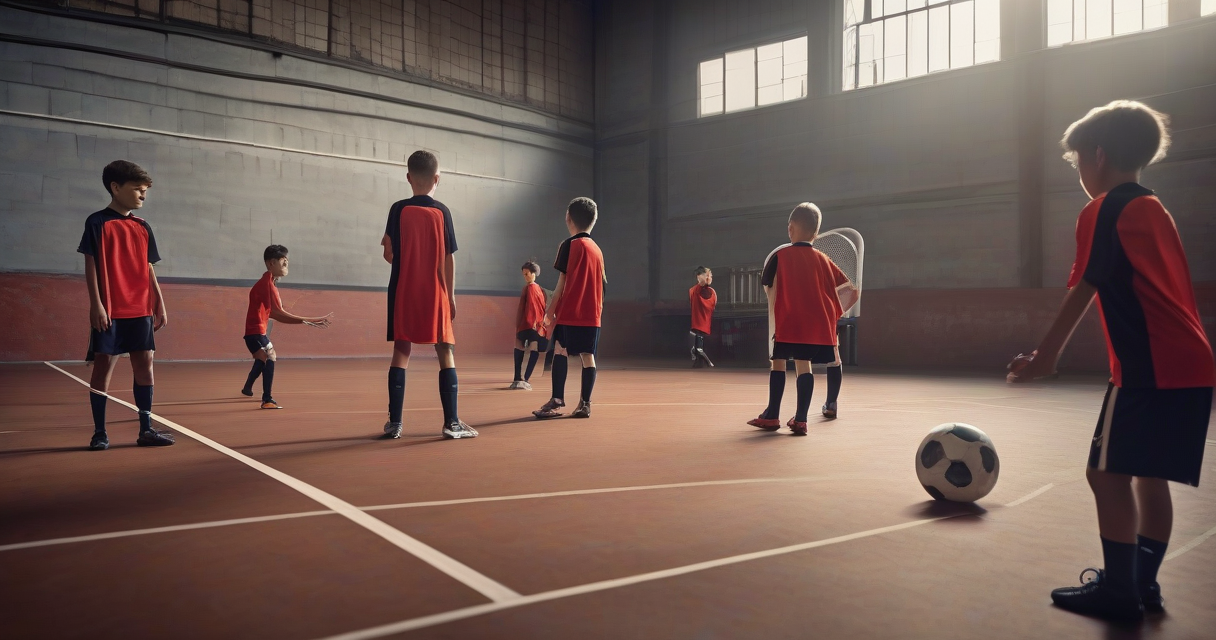
A classic example is the “3v2 Rondo with Constraints” drill. Players in possession must complete five passes before scoring, but they’re also given a tactical rule, like maintaining width or playing through the middle. This drill forces players to use their technical skills (passing, dribbling) while applying tactical principles (positioning, support). Studies from the Journal of Sports Sciences show that drills with clear constraints improve both skill execution and decision-making more effectively than unstructured play. The key is to make the constraints relevant to the players’ age and experience level, younger kids might focus on keeping their eyes up, while older players can work on recognizing defensive shapes.
Another approach is to use game-like scenarios that require technical precision to execute tactical ideas. For instance, a “Possession Under Pressure” drill where players must pass through a series of cones while defenders attempt to intercept. This drill reinforces technical skills like first touch and close control while teaching players to read defensive pressure. The progression should always be from simple to complex, start with fewer defenders, then add more, and finally introduce time constraints or goal-scoring elements. This ensures players aren’t overwhelmed and can focus on refining both skills in tandem.
Common Mistakes Coaches Make When Balancing Technical and Tactical Training
One of the most frequent errors is treating technical and tactical training as separate entities that can be scheduled on different days. This creates a disjointed experience where players practice ball control one day and positional play the next, without connecting the two. Research from the European Journal of Sport Science indicates that players retain and apply skills more effectively when they’re learned in context. For example, a player who masters a step-over move in isolation may struggle to use it effectively in a game because they haven’t practiced the decision-making that precedes the move.
Another mistake is overemphasizing tactical training at the expense of technical fundamentals. Some coaches assume that if players understand the “why” behind a play, they’ll naturally execute it well. However, tactical awareness without technical proficiency leads to sloppy, inconsistent performance. For instance, a player might know they should play a pass to the wing, but if their first touch is weak, the pass will be inaccurate or intercepted. The solution is to always pair tactical cues with technical reinforcement. For example, when teaching a player to play a through ball, first drill the precise placement of the pass, then add the tactical element of recognizing when to deliver it.
Coaches also often make the error of using the same drills for all age groups, which can stifle development. A 7v7 scrimmage designed for 12-year-olds might be too complex for 8-year-olds, who need simpler, more repetitive drills to build technical confidence. Conversely, the same scrimmage might feel too basic for 14-year-olds, who need drills that challenge their tactical decision-making. The Long-Term Athlete Development model from the U.S. Soccer Federation recommends tailoring drills to the players’ developmental stage, younger players need more technical repetition, while older players benefit from game-like scenarios that test their tactical understanding.
Age-Specific Approaches to Balancing Technical and Tactical Training
The way you balance technical and tactical training should shift as players grow older, reflecting their physical and cognitive development. For players under 10, the focus should be on technical mastery with minimal tactical demands. Drills should emphasize repetition, such as dribbling through cones or practicing close control in small spaces. At this age, players are still developing their motor skills, and their ability to process information in real time is limited. Research from the British Journal of Sports Medicine suggests that young players benefit most from drills that are simple, repetitive, and fun, complex tactical scenarios can overwhelm them.

Between ages 10 and 14, players begin to develop more advanced tactical awareness, but their technical skills still need refinement. This is where drills that combine both elements become essential. For example, a “Possession Square” drill can teach players to maintain shape while keeping the ball, reinforcing both technical passing and tactical positioning. Players in this age group can also start to understand basic principles like width, depth, and support, but they’ll still need plenty of technical repetition to execute these ideas effectively. The UEFA Youth Development Model recommends that at this stage, coaches should introduce more game-like scenarios while continuing to drill fundamental skills.
For players 14 and older, the balance shifts further toward tactical training, though technical skills should never be neglected. At this stage, players should be working on more complex decision-making, such as recognizing defensive patterns or exploiting space in transition. Drills should increasingly resemble real-game scenarios, with fewer constraints and more emphasis on adaptability. However, technical skills like finishing, long-range passing, and defensive positioning still require practice. The FIFA Youth Development Strategy emphasizes that even at this stage, players need to maintain a strong technical foundation to support their growing tactical sophistication. The mistake here is assuming that technical skills are no longer important, players who lose their touch or passing accuracy will struggle to execute even the most brilliant tactical ideas.
Practical Drills That Integrate Technical and Tactical Elements
To make the balance between technical and tactical training tangible, here are three drills that seamlessly blend both aspects. The first is the “4v4 + 2 Neutral Players” drill, where two neutral players act as “extra midfielders” to help maintain possession. This drill reinforces technical skills like passing and receiving while teaching players to use the neutrals to break defensive lines tactically. The progression can include adding a goalkeeper to introduce shooting under pressure, further linking technical execution (shooting form) with tactical awareness (when to shoot).
Another effective drill is the “Zonal Possession Game” with defined areas for players to move into. For example, set up a 30×20-yard grid with three zones, one for defenders, one for midfielders, and one for forwards. Players must pass into the correct zone to progress, teaching them to recognize when to play forward, backward, or sideways. This drill forces players to use their technical skills (passing accuracy) while applying tactical principles (positional play and movement). The added constraint of limiting touches per player can further challenge their decision-making.
The final drill is the “Transition Game with Constraints,” where players must score quickly after regaining possession. For example, after winning the ball, they have 10 seconds to score before the other team gets a corner kick. This drill sharpens technical skills like quick passing and shooting while teaching players to exploit defensive transitions tactically. The constraints (like the 10-second limit) add urgency, making the drill more game-like and reinforcing the connection between technical execution and tactical speed.
Each of these drills can be adapted to different age groups by adjusting the size of the playing area, the number of players, or the complexity of the constraints. The goal is to always keep the focus on both technical precision and tactical awareness, ensuring players develop holistically rather than in isolated skill areas.

I’ve been playing soccer since I was a kid and love breaking down drills to help players improve. When I’m not on the pitch, I enjoy analyzing games and sharing practical tips with fellow enthusiasts.