Building a resilient back line requires more than just athletic center backs and fast full backs reacting to chaotic moments on the pitch. Modern tactical theory emphasizes that stopping goals starts long before the opposition reaches the penalty box, relying heavily on coordinated positioning and spatial awareness. Coaches who implement defensive shape soccer drills during regular training sessions notice a dramatic reduction in unforced errors and dangerous shooting lanes. Teams often struggle not from a lack of effort, but from a fundamental breakdown in shifting together as a single tactical unit. Establishing clear reference points helps players understand where to slide when the ball travels from the central midfield to the wide areas. Communication serves as the adhesive holding the entire back four and supporting midfielders together while under intense pressure from dynamic attackers. Mastering these collective movements takes weeks of repetitive practice on the training ground, turning instinctive reactions into reliable habits.
Establishing Foundational Spatial Awareness
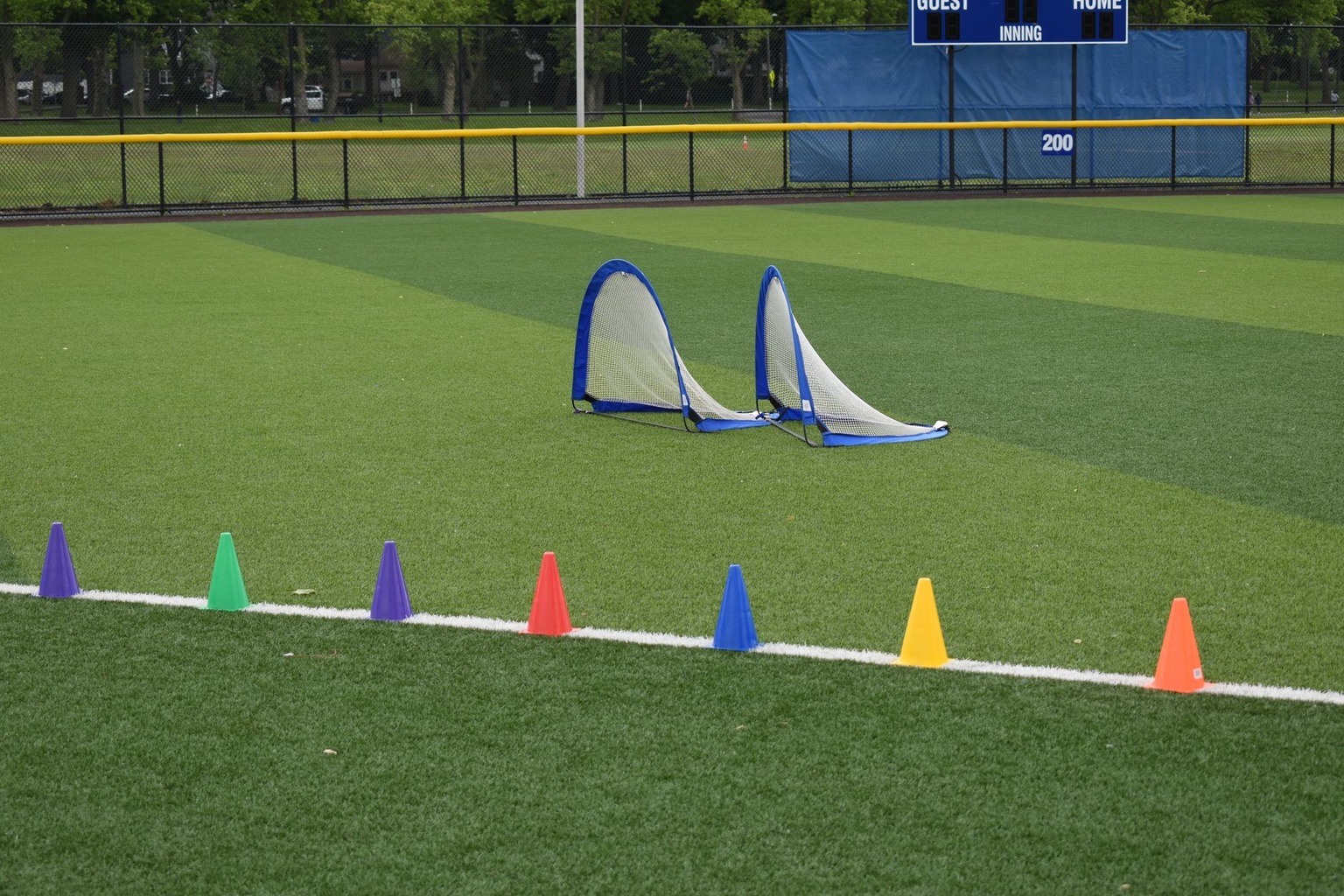
Players must learn to perceive the field in terms of zones and passing lanes rather than just chasing the person carrying the ball. Coaches often set up grid zones using cones to teach defenders which specific quadrant belongs to them during different phases of play. This spatial comprehension prevents two players from stepping to the same attacker and leaving a massive gap behind them. Implementing defensive shape soccer drills within these restricted grids forces athletes to keep their heads up and scan their surroundings constantly. Understanding body orientation is equally vital because facing the ball at a slight angle allows a player to see both the attacker and the central center back. Practicing these visual scanning habits during low tempo warmups builds the foundation for more complex match scenarios later in the session. Instructors should pause the action frequently to ask players where their teammates are positioned relative to the opponent holding possession.
Coordinating the Shift Across the Pitch
The entire defensive block must move synchronously in the direction of the ball whenever the opponent switches the point of attack. If the ball travels to the opposing right winger, the entire defensive line needs to shuffle across so that the weak side full back tucks in. This sliding motion eliminates the dangerous space between defenders that clever attacking midfielders love to exploit with through balls. Utilizing defensive shape soccer drills that involve neutral attackers passing the ball around the perimeter helps teams practice this lateral shifting rhythm. Players on the ball side must apply pressure or close down passing angles, while weak side defenders drop slightly deeper to cover potential runs. The timing of the slide is critical because moving too early exposes the opposite flank, whereas moving too late allows an easy cross into the box. Repetition during small sided games helps muscle memory take over, ensuring the defensive unit moves as a rigid chain rather than scattered individuals.
Managing Depth and Defensive Lines
Maintaining a cohesive line of depth prevents opponents from finding easy pockets of space between the midfield and the defensive unit. The center backs act as the anchors of this vertical control, stepping up to squeeze the pitch or dropping off when an aerial threat looms. Coaches frequently use a rope or a painted line on the turf during early teaching phases to give players a visual cue for holding the line. Incorporating specific defensive shape soccer drills that feature offside rules helps train the back line to step up in unison when the opponent plays a backward pass. If one defender lags behind, the entire offside trap fails and a fast forward is suddenly through on goal against the goalkeeper. Communication from the goalkeeper is indispensable here because the person in the net has the best view of the entire tactical picture. Defenders must trust their colleagues implicitly, knowing that stepping forward together minimizes the operating room for creative playmakers.
On the Lobos Rush Desoto channel, they cover basic defensive shifting, and you can watch it right here.
Handling Numerical Disadvantages in Training
Matches rarely present even scenarios in every zone of the pitch, meaning defenders often have to cope with temporary overloads created by overlapping runners. Training sessions must replicate these stressful moments by putting the defensive unit at a numerical disadvantage during practice matches. Running defensive shape soccer drills with four defenders against five attackers teaches players how to delay the attack instead of lunging in desperately. The nearest defender must pressure the ball carrier to slow down the momentum, buying precious seconds for central midfielders to recover and track back. Other defenders must prioritize the most dangerous passing option first, often forcing the opponent to play harmlessly backward or wide. Learning when to press aggressively and when to drop into a compact block is an art form developed through thousands of repetitions under pressure. Players discover that staying on their feet and trusting their positioning usually yields better outcomes than diving in for a risky tackle.
Transitioning from Attack to Defensive Organization
The most vulnerable moment for any team occurs immediately after losing possession in the attacking third of the field. Gegenpressing or immediate counter pressing is popular, but if that initial wave fails, the team must retreat into a structured shape rapidly. Coaches design specialized defensive shape soccer drills that start with an offensive possession phase before blowing a whistle to simulate a turnover. Players must instantly switch mental modes, sprinting back into their designated defensive zones rather than standing around arguing with the referee. The nearest players to the ball must engage in tactical fouling or immediate pressure to buy time for the rest of the unit to organize. Establishing clear recovery roles ensures that central midfielders do not collide with center backs while sprinting toward their own goal. Practicing this chaotic transition repeatedly turns panic into a calm, methodical retreat that neutralizes most counter attacking threats.
Communication Protocols and Leadership on the Pitch
Organized defenses are universally characterized by constant, loud, and constructive communication between the goalkeeper, center backs, and holding midfielders. Quiet players struggle to anchor a back line effectively because teammates cannot see blind spots developing behind their shoulders during high speed action. Incorporating communication mandates into defensive shape soccer drills helps shy players find their voice and take charge of their respective zones. Terms like step, cover, push, and watch must become second nature, echoing across the training pitch during every single drill. The central defender usually takes the mantle of general, directing traffic and ensuring the distances between players remain tight and manageable. Cultivating this vocal leadership transforms a collection of talented athletes into a synchronized unit capable of shutting down the most prolific scoring teams.

I’ve been playing soccer since I was a kid and love breaking down drills to help players improve. When I’m not on the pitch, I enjoy analyzing games and sharing practical tips with fellow enthusiasts.