Introduction to Soccer Drills with Cones
In the world of soccer training, cone exercises have proven to be an essential tool for players looking to enhance their skills and agility on the field. Soccer drills with cones offer structured, yet versatile practice opportunities that help athletes develop better ball control, coordination, and quick decision-making. Incorporating cones into your soccer training regimen can significantly improve your overall performance during matches.
One of the primary benefits of using cones in soccer drills is the ability to create a variety of challenging scenarios that mimic real game situations. These drills encourage players to navigate through tight spaces, make swift changes in direction, and accelerate effectively. The physical and mental demands of cone exercises contribute to increasing a player’s agility, which is crucial for outmaneuvering opponents and recovering defensively.
Moreover, soccer drills with cones are adaptable for all skill levels—from beginners to advanced players. Coaches can adjust the spacing and complexity of cone arrangements to target specific skill sets or to increase the difficulty progressively. This flexibility ensures that players remain engaged and continually develop their abilities without plateauing.
Another advantage of cone exercises in soccer training is the promotion of muscle memory. Repeatedly practicing movements around cones helps players internalize footwork patterns and improves their responsiveness during actual gameplay. This heightened muscle memory translates to more fluid movement and precise execution under pressure.
In summary, soccer drills with cones are a vital component of effective soccer training. They offer a practical and dynamic way to boost a player’s agility, technical skills, and game readiness. Whether training solo or in a team setting, incorporating cone exercises into your routine will yield noticeable improvements and contribute to your success on the pitch.
Benefits of Using Cones in Training
Incorporating cones into soccer training offers several cone benefits that significantly improve a player’s performance on the field. One of the primary training advantages is enhanced coordination. Navigating through cone drills requires precise footwork and body control, helping players develop the ability to move smoothly and accurately in tight spaces. This improved coordination translates directly into better movements during matches.
Another key benefit is the increase in speed. Cone drills are designed to encourage quick changes of direction and rapid acceleration, which are essential skills in soccer. By practicing around cones, players learn to optimize their foot placement and stride length, which boosts their overall agility and speed. This soccer agility is crucial for beating opponents and maintaining control during fast-paced plays.
Finally, cones play an essential role in refining ball control. Drills involving dribbling around cones require players to keep the ball close to their feet, improving touch and control under pressure. This enhances a player’s confidence in handling the ball while maneuvering through defenders, making it easier to maintain possession and create scoring opportunities during a game.
Overall, the strategic use of cones in training sessions offers a comprehensive set of benefits, enhancing coordination, speed, and ball control. These training advantages contribute to elevated soccer agility and more effective gameplay on the field.
Essential Equipment Needed
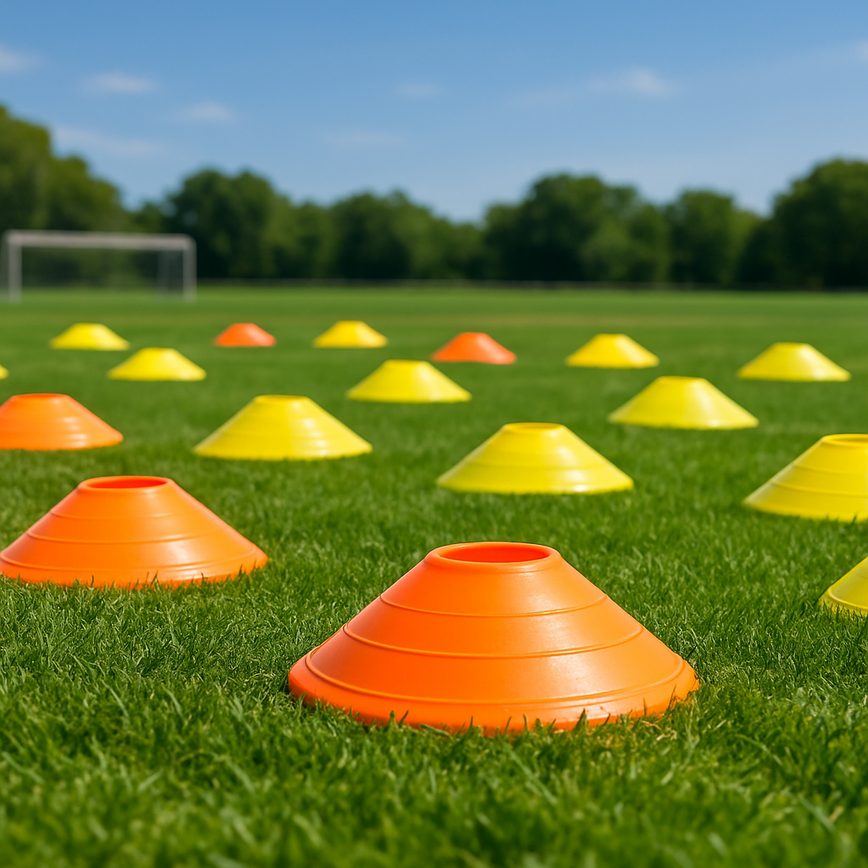
When setting up effective soccer drills, having the right training cones is essential. These cones serve as key markers on the field, helping players navigate through drills that improve agility, speed, and ball control. Opt for durable, brightly colored cones made from flexible plastic to withstand repeated use and outdoor conditions. The vibrant colors not only improve visibility but also allow coaches to assign different drills or zones on the field by color coding the cones.
Alongside training cones, other soccer equipment is important to create comprehensive practice sessions. Items such as agility ladders, training poles, and small goals complement the cones by adding variety and challenge to drills. Agility ladders enhance footwork, while poles can be used to simulate defenders or obstacles to dribble around. Small goals help hone shooting accuracy within confined spaces, reinforcing precise ball control and finishing skills.
Investing in quality practice gear ensures that drills run smoothly and provide meaningful improvements for players. Lightweight cone bags make it easier to transport and store the equipment, keeping everything organized and accessible for quick setup and pack-up. Ultimately, combining well-chosen training cones with additional soccer equipment creates an effective and engaging training environment that encourages skill development and teamwork.
Top Soccer Drills with Cones for Skill Development
- Slalom Dribbling Drill: Set up cones in a straight line with equal spacing. Dribble the ball weaving in and out of the cones using the inside and outside of both feet. This soccer cone drill enhances close control and agility, helping players improve their dribbling skills in tight spaces.
- Figure Eight Drill: Arrange two cones about 5 feet apart. Dribble the ball around the cones in a figure-eight pattern. This drill promotes quick changes of direction and improves coordination, providing excellent skill improvement for ball handling under pressure.
- Speed and Agility Drill: Place cones in a zigzag pattern across the training area. Sprint and dribble the ball from one cone to the next, focusing on quick touches and acceleration. This drill enhances both speed and agility, which are critical for game scenarios requiring rapid direction changes.
- Box Dribbling Drill: Arrange four cones to form a square about 10 feet apart. Dribble around the perimeter of the box, varying your pace and changing direction frequently. This soccer cone drill helps develop dribbling accuracy and stamina, making players comfortable maneuvering around opponents.
- Cone Gate Dribbling: Set up pairs of cones spaced apart like gates. Dribble the ball through each gate using different parts of the foot. This exercise assists in improving ball control and precision, crucial for executing sharp passes and maintaining possession during matches.
- Endurance Cone Drill: Lay out a series of cones at longer distances. Dribble full speed between cones to build endurance while maintaining ball control. This helps players sustain skillful dribbling even during physically demanding game phases.
Dribbling Drills to Improve Control
Mastering close ball control is essential for any soccer player looking to enhance their dribbling skills. One effective dribbling drill involves setting up a series of cones in a straight line about one meter apart. The player weaves the ball carefully through the cones, focusing on precise touches to keep the ball close. Using both feet alternately can improve control and agility. Another excellent cone training drill is the figure-eight pattern, where cones are arranged in pairs. Players dribble around the cones in a figure-eight motion, encouraging sharp turns and quick changes in direction while maintaining ball control.
To increase difficulty, challenge players to perform these drills at progressively faster speeds without losing control of the ball. Emphasize the importance of using the inside, outside, and sole of the foot for varied touches, which enhances ball handling in tight spaces. Incorporating cone training regularly helps improve spatial awareness and maneuvering skills, thus allowing players to navigate crowded areas on the field easily. These dribbling drills build confidence, refine technique, and boost overall ball control, making a player more effective during games.
Agility and Speed Cone Drills
Agility drills and speed training are essential components for any soccer player looking to enhance their overall performance on the field. Cone exercises provide an effective and versatile way to develop quick changes in direction, acceleration, and precise footwork. One popular drill is the zig-zag sprint, where players sprint from one cone to the next arranged in a zig-zag pattern. This drill forces players to focus on sharp cuts and quick foot placement, improving both speed and agility.
Another effective cone exercise is the shuttle run. Set up cones at short intervals and have players sprint back and forth between them as fast as possible. This drill builds explosive speed and the ability to decelerate quickly, which is key during match situations when players need to react fast. Incorporating lateral cone drills, such as side shuffles around cones, further enhances agility by working on side-to-side movements and balance.
To maximize the benefits of these agility drills, it is important to maintain proper form and stay low to the ground to ensure fast directional changes. Consistent practice of cone exercises not only improves physical speed but also sharpens a player’s mental focus and anticipation during dynamic plays. By integrating speed training and cone drills into regular practice sessions, players can gain the edge they need to outperform opponents with quicker, more agile movements.
Passing and Shooting Accuracy Drills
Enhancing passing precision and shooting accuracy is crucial for any soccer player, and cone setups provide an excellent way to practice these skills. One effective passing drill involves arranging cones in a zigzag pattern spaced about 3–4 feet apart. Players must pass the ball through the cones to a partner waiting at the end. This drill helps develop control, timing, and focus, improving the accuracy of passing under pressure.
For shooting accuracy, set up a series of cones to create target zones within the goal. Players take turns shooting the ball aiming to hit specific cone-marked areas, such as near each post or the center of the goal. This encourages precision and helps train players to place shots more deliberately rather than just focusing on power. Incorporating cones to mark decreasing target spaces can increase the difficulty gradually.
Combining passing drills with shooting accuracy is also beneficial. For example, players can perform quick passes using cone setups before taking a shot on goal. This flow mimics game-like scenarios, building readiness and coordination. Regular practice of these cone drills will result in sharper passing skills and more confident, accurate shooting on the field.
Tips for Effective Soccer Cone Drills
Maximizing the effectiveness of soccer cone drills requires a combination of proper planning, focused execution, and consistent practice. Whether you’re training individually or with a team, applying these training tips can significantly enhance your drill effectiveness and improve your overall soccer skills.
First, set clear, specific goals before starting each drill session. Knowing what you aim to improve—be it agility, ball control, speed, or coordination—helps maintain focus and measures progress effectively. Clear objectives keep training purposeful, preventing time wasted on unfocused practice.
Next, maintain proper form and technique throughout every repetition. Concentrate on body posture, foot placement, and ball handling while maneuvering through cones. Drills performed with sloppy technique might train bad habits, so attentiveness to detail is key for real skill development.
Incorporate variability in your drills to challenge different facets of your game. Change the spacing between cones, the speed at which you complete drills, or add ball touches and dribbling variations. This diversity not only keeps practice interesting but also simulates real-game scenarios more closely.
Consistent practice is essential. Schedule regular training sessions focusing on cone drills to build muscle memory and increase drill effectiveness. Short, frequent sessions—rather than infrequent long practices—can help maintain high energy and motivation levels while promoting steady improvement.
Additionally, always warm up properly to prepare your muscles and reduce injury risk. A dynamic warm-up including light jogging, stretching, and basic ball touches primes your body for the intense movements involved in cone drills.
Lastly, review and reflect on your performance after each session. Use video recordings or coach feedback to identify areas for improvement and adjust your training plans accordingly. This continuous evaluation enhances drill effectiveness by targeting weaknesses and reinforcing strengths.
By following these soccer practice advice tips and integrating them into your routine, you can extract the maximum benefit from your cone drills and see noticeable progress on the field.
Setting Up Your Training Space
Choosing the right training setup is essential for effective soccer drills with cones. Begin by selecting a flat and spacious practice area, such as a grassy field, artificial turf, or even a large indoor gym, depending on availability and weather conditions. The surface should allow for safe movement and good traction to maximize training efficiency.
Once the location is secured, consider the layout for your cone arrangement. The cones should be placed strategically to create clear pathways and boundaries that suit the specific drills you plan to run. Whether you’re focusing on agility, dribbling, or speed, the spacing between cones must allow players to maneuver without overcrowding while maintaining the challenge of precise control.
It’s also important to account for visibility by ensuring the cones are brightly colored and easily distinguished against the background of the practice area. This helps players quickly recognize drill patterns and enhances the flow of the exercise. Mark out a designated training space that is free from obstacles, with enough room for players to rest and coaches to observe.
A thoughtfully planned training setup not only elevates the effectiveness of each session but also develops players’ confidence and coordination. By taking time to arrange cones clearly and selecting an optimal practice area, you set the foundation for productive and engaging soccer drills.
Progressing Drill Difficulty
To ensure continuous improvement in soccer skills, it is important to apply drill progression thoughtfully. Gradually increasing the difficulty of cone drills helps players stay challenged and engaged, adapting to their evolving skill levels. Start by introducing basic cone setups that focus on mastering fundamental movements such as weaving or quick directional changes. As players become comfortable, increase the training intensity by reducing the space between cones or adding time limits.
Another way to progress drills is to incorporate variations that require more technical precision or greater speed. For example, adding ball control elements or combining cone drills with passing exercises enhances coordination and multitasking abilities. Monitoring players’ performance and skill levels allows coaches to tailor the difficulty, ensuring that challenges are neither too easy nor overly frustrating.
Progression also involves integrating competitive elements, such as races against teammates or timed trials, which boost motivation and simulate game pressure. By methodically escalating drill complexity, coaches can maintain optimum training intensity, support skill development, and prepare players for real match scenarios. Ultimately, drill progression is essential for continuous growth and long-term success on the field.

I’ve been playing soccer since I was a kid and love breaking down drills to help players improve. When I’m not on the pitch, I enjoy analyzing games and sharing practical tips with fellow enthusiasts.